
What TLCI Rating Should a Studio Fresnel Reach
Views: 0 Author: Site Editor Publish Time: 2026-11-04 Origin: Site


Ever spent hours fixing strange skin tones in the editing bay? Poor studio lighting often causes this frustrating problem. As the broadcasting and filmmaking industries transitioned from traditional film to digital formats, professionals quickly realized that existing lighting measurements were no longer sufficient. Digital cameras require precise metrics like TLCI to process visual data accurately. In this post, you will learn the ideal rating for your equipment. We will discuss choosing the right studio Fresnel. This ensures your next shoot yields pristine, true-to-life footage without the headache of endless post-production tweaking.
Key Takeaways
The Gold Standard: A professional studio Fresnel must reach a rating of 95 or higher. This guarantees zero to minimal color correction in post-production.
Digital Accuracy vs. Human Vision: Traditional metrics measure how colors look to the naked eye. Modern standards evaluate color interpretation by a digital sensor.
Post-Production Impact: High fidelity ratings guarantee accurate color reproduction. This makes locking in a perfect white balance on set significantly easier.
Technological Advancements: Modern LED fixtures easily achieve scores above 95. They rival traditional tungsten bulbs while offering vastly superior heat management.
What is TLCI and Why is it the Ultimate Metric for Studio Lighting?
To make an informed purchasing decision for your soundstage or photography studio, you must first understand the underlying science of modern lighting metrics. The gap in technical evaluation during the digital revolution led to a completely new standard of measurement.
The Science Behind the Television Lighting Consistency Index
Developed by the European Broadcasting Union, this metric was engineered to solve a very specific modern problem. Digital cameras process light entirely differently than analog film or the human eye. Instead of relying on human observation, the test utilizes a highly complex mathematical model of a standard three-chip broadcast camera. A spectroradiometer measures the spectral power distribution of a light source. Specialized software then analyzes how that specific light would render 24 distinct color patches on a Macbeth ColorChecker chart. The result is a single numerical score from 0 to 100. A perfect score indicates that the light source requires zero color correction.
Why Your Camera Sensor Sees Light Differently Than You Do
Human vision is an incredibly adaptable biological system. Our brains automatically perform complex environmental adjustments. This allows us to perceive a white piece of paper as perfectly white, whether we sit under a warm incandescent desk lamp or cool fluorescent office lights. Conversely, a digital sensor is entirely objective and unforgiving. It captures the exact wavelengths of light hitting its surface. From an engineering standpoint, sensors are particularly sensitive to invisible shifts along the magenta and green axis. A light source might look perfectly natural to a gaffer on set. However, the camera might detect a severe green spike, leaving your talent looking jaundiced. This index specifically tests for these invisible spectral anomalies.
TLCI vs. CRI: Why Colour Rendering Matters for Your Camera
When evaluating lighting equipment, buyers frequently encounter a barrage of acronyms. While both attempt to quantify light quality, they serve entirely different purposes in modern production environments. Understanding this distinction is the key to protecting your equipment investment.
The Limitations of the Colour Rendering Index
Established in the 1960s, the CRI metric was created long before digital sensors existed. Its fundamental flaw for modern filmmaking is its reliance entirely on human vision. Furthermore, the standard measurement only evaluates how a light source renders eight basic pastel colors, known as R1 through R8. Because it focuses heavily on pastels, a lighting fixture can easily manipulate the test to achieve a high score while performing terribly on heavily saturated colors. Most dangerously for portrait and cinematic work, it completely ignores the R9 deep red value. This specific wavelength is critical for accurately capturing the blood flow beneath human skin tones.
A Direct Comparison for Studio Setup
To clarify the operational differences, we can look at how these metrics apply on set.
| Metric | Primary Focus | Test Colors | Relevance to Digital Video |
|---|---|---|---|
| CRI | Human Eye Perception | 8 Pastel Patches | Low. Can be easily manipulated by poor quality LEDs. |
| TLCI | Digital Camera Sensors | 24 Complex Patches including Skin Tones | High. Directly correlates to post-production color grading needs. |
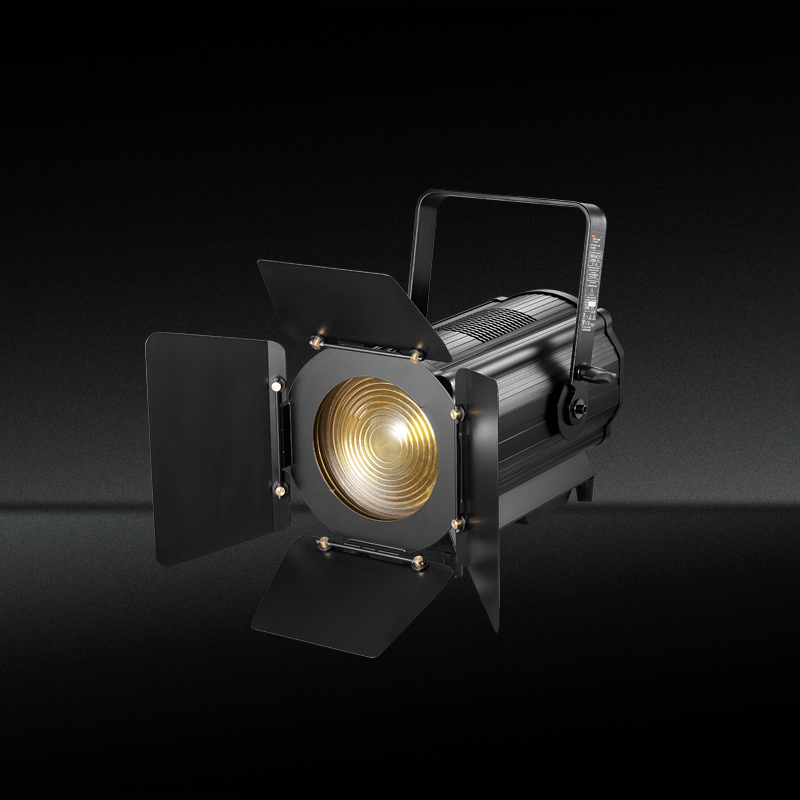
The Benchmark: What TLCI Rating Should a Studio Fresnel Reach?
Looking at the current trajectory of the broadcasting industry, we see a massive shift driven by 4K and 8K high dynamic range delivery standards. High dynamic range ruthlessly exposes microscopic spectral discrepancies that older 1080p formats would have easily masked. Furthermore, the rise of virtual production and LED volumes requires physical lighting to match digital backgrounds flawlessly. Consequently, major television networks and independent rental houses are standardizing their inventories. They actively phase out any fixture scoring below 93. This democratization of high-fidelity lighting means you no longer need a Hollywood budget to achieve cinematic color accuracy.
When investing in studio equipment, you need objective benchmarks to justify your budget. So, what exact rating should you target?
Scores 85 to 90: Acceptable, but Requires Correction
Lighting fixtures falling into this tier are generally considered acceptable for entry-level content creation. This includes basic vlogging, corporate presentations, or background practical lights. Empirical data shows that lights in this range will produce noticeable color shifts. Editors inevitably spend tedious hours in post-production applying secondary color corrections to fix minor skin tone inaccuracies or lingering green tints.
Scores 90 to 95: Broadcast Quality
A score between 90 and 95 represents the minimum acceptable standard for professional television broadcasting and standard studio work. At this level, the camera sensor captures colors that are generally true to life. Any necessary color correction during the grading process remains minimal and fast. Most reliable mid-tier professional lights comfortably sit in this category.
Scores 95 to 100: The Gold Standard for Professional Film
For high-end commercial photography, feature films, and premium broadcast studios, a top-tier studio Fresnel must hit a rating of 95 or higher. This is the undisputed gold standard. When a fixture scores 95 or above, the European Broadcasting Union states that the camera requires absolutely zero color correction. The light spectrum is perfectly balanced. Wardrobe fabrics, set designs, and subtle makeup details are captured exactly as the director intended.
How a High TLCI Rating Impacts White Balance and Post-Production
The theoretical numbers on a manufacturer specification sheet translate directly into highly practical, real-world benefits on set. Upgrading your lighting fundamentally streamlines the workflow of an entire production.
Nailing the Perfect Neutral Profile In-Camera
Setting an accurate White Balance is the absolute foundation of any clean shot. This mechanism operates on two axes. One is color temperature moving from amber to blue. The other is tint moving from green to magenta. A studio Fresnel with a poor rating often introduces unpredictable green or magenta spikes. When this happens, setting a custom balance becomes a nightmare. If you correct for the green spike on the face of your subject, the background might suddenly shift to a toxic magenta. A premium fixture ensures a smooth, continuous spectral output. This allows the camera to lock in a perfect, neutral profile instantly.
Saving Time and Budget in Color Grading
Time is the most expensive commodity in film and television production. When lighting yields poor rendition, colorists must spend hours building custom Look-Up Tables, masking faces, and isolating specific color vectors just to make the footage look normal. By utilizing fixtures with a 95 plus score, productions capture vibrant colors instantly. Bypassing the need for heavy, corrective grading allows editors to focus their budget and energy on creative color styling to enhance the narrative mood.
Why LED Studio Fresnels Are Leading the High-Fidelity Revolution
The studio lighting landscape has undergone a massive technological shift over the last decade. Understanding this evolution helps clarify why specific fixtures now dominate professional soundstages worldwide.
The Transition from Traditional Tungsten to LED
Historically, traditional halogen tungsten bulbs were the standard for film lighting. By the laws of physics, a burning tungsten filament produces a continuous spectrum of light. This naturally achieves perfect Colour Rendering. However, these fixtures are notoriously inefficient. They generate extreme heat, consume massive amounts of electricity, and feature highly fragile bulbs. Through advanced phosphor coatings and multi-color diode mixing, modern LED Fresnels now comfortably match the color accuracy of tungsten. They do this while operating at a fraction of the temperature and energy cost.
Consistency Across Multiple Fixtures
In a professional studio environment, a single light is rarely used alone. A standard broadcast news desk might utilize dozens of Fresnel fixtures in a complex overhead grid. If these lights possess varying spectral ratings, the camera captures patchy, inconsistent colors across the set. Procuring fixtures from reputable manufacturers ensures strict binning processes for their LED chips. This guarantees that every single fixture matches perfectly across the entire production space.
Key Features to Look for When Buying a Professional Studio Fresnel
While a stellar rating is a non-negotiable metric for color accuracy, it is not the only specification that matters. As engineers evaluating equipment, we know a truly professional fixture must combine excellent spectral output with robust mechanical and electronic capabilities. Here are the exact parameters you should verify.
Essential Specifications for Filmmakers and Photographers
High-Power Output with Precision Zoom: Look for fixtures offering significant wattage, such as 300W LED engines. A smooth mechanical zoom ranging from 15 degrees to 50 degrees allows precise control. This enables gaffers to spot light tightly on a subject or flood a background evenly.
Flicker-Free Dimming: High Pulse Width Modulation frequency is absolutely essential. The dimming frequency should exceed 25,000Hz for shooting slow-motion footage. This prevents banding or microscopic flickering on camera.
Silent Cooling Systems: High-output LEDs generate internal heat. Fan noise must remain below 25 decibels or utilize passive cooling. This ensures sensitive shotgun microphones do not pick up fan hum during quiet dialogue scenes.
DMX512 Control Integration: Standard 5-pin DMX integration is mandatory for studio grids. It allows lighting technicians to control dimming curves and color temperature remotely from a central studio console.
Top Mistakes to Avoid When Evaluating Studio Lighting Specs
The lighting market is heavily saturated. Marketing materials can sometimes obscure empirical data. To protect your production budget, avoid these common industry pitfalls when reviewing equipment specifications.
Trusting Outdated Metrics Alone
Many budget manufacturers proudly advertise a 95 plus rating while conveniently hiding their television consistency score. As established, high performance on pastel colors does not guarantee that your digital camera will process the light accurately. Always demand comprehensive digital data.
Ignoring the Deep Red Value
If a manufacturer only provides standard metrics, look deep into the photometric reports for the R9 deep red value. If this specific value falls below 80, the light will likely render human skin tones with an unnatural, sickly pallor. This happens regardless of how high the overall average score appears to be.
Buying Unverified Lights Without Spectral Charts
Reputable lighting manufacturers test their fixtures using calibrated, industry-standard spectrometers. They readily provide spectral power distribution charts and full testing reports. Purchasing cheap, unbranded lights with inflated, unverified ratings often leads to costly reshoots and extensive post-production delays.
Conclusion and Equipment Selection
Ultimately, modern metrics reveal exactly how a Camera Sensor processes illumination. This standard is no longer an optional luxury. It is a vital requirement for modern film and television production. By aiming for a benchmark score of 95 or higher, you guarantee that your captured colors look completely natural and true to life. Exceptional lighting ensures a flawless balance in-camera, saving your team countless hours and thousands of dollars during the editing phase.
When you are ready to upgrade your soundstage, always demand real, verifiable testing data before making a purchase. For industry-leading color fidelity, consider exploring the High Power LED Fresnel Spotlights from The One Studio. Their fixtures consistently deliver a rating above 97, combined with silent cooling and professional DMX control. Equip your studio with the right technology to achieve truly professional, broadcast-ready results on your next project.
FAQ
Can I fix a low TLCI light in post-production?
While very minor color shifts can be corrected using tint sliders in your editing software, a fundamentally low score means certain color wavelengths are entirely missing from the light spectrum. You cannot fix or enhance colors in post-production if the light source never produced those specific wavelengths in the first place. The visual data simply is not there for the camera to capture.
Is a score of 90 good enough for video streaming platforms?
Yes, a rating of 90 is generally acceptable for standard web content, vlogging, and basic sit-down interviews. However, if you are shooting high-end product photography, detailed makeup tutorials, or cinematic narrative content, aiming for a rating of 95 or higher is highly recommended to maintain strict professional visual standards.
Does this metric matter if I only shoot in black and white?
It matters slightly less for absolute color accuracy, but a low-quality light might still possess a highly uneven spectral output. This jagged spectrum can negatively affect the contrast and tonal separation of different colored objects when converted to monochrome. This often results in a flat, muddy, or visually confusing black-and-white image.
Why do some lights have a high traditional rating but fail digital tests?
Older tests only evaluate a limited range of eight pastel colors based on subjective human vision. A lighting manufacturer can easily engineer their diodes to perform exceptionally well on those specific pastel colors while completely ignoring the rest of the spectrum. These lights often have severe green or magenta shifts that bypass older tests but are immediately detected by sensitive digital lenses.
What happens if my studio lights have mismatched TLCI ratings?
Mixing lights with different spectral qualities creates a nightmare scenario for your camera sensor. Even if you set a custom white balance for your key light, the fill or backlight might cast a sickly green or magenta tint on the edges of your subject. To ensure a cohesive and professional look, always use fixtures with matching high-fidelity ratings across your entire studio grid.
Is TLCI more important than color temperature for video production?
Both are crucial, but they serve different functions. Color temperature dictates the mood and warmth of the scene, whether you want a warm 3200K indoor look or a crisp 5600K daylight feel. The consistency index dictates the actual quality and accuracy of the light at that chosen temperature. A light can have a perfect 5600K temperature but a terrible consistency score, resulting in unnatural skin tones despite being the correct color temperature.


