LED Fresnel Light for Rental Stages: Comparing Color Control, Zoom and Weather Protection
Views: 0 Author: Site Editor Publish Time: 2026-09-30 Origin: Site


Event production has completely transformed over the past decade. Ten years ago, heavy dimmer racks and blistering halogen lamps ruled the stage. Today, highly efficient LED technology is the undisputed standard. But for rental houses and event production companies, this shift extends far beyond merely saving power on a generator. It is fundamentally about maximizing inventory utility, reducing labor costs, and surviving in a fiercely competitive market.
Think about your typical weekend load-in. Friday morning requires lighting a sterile corporate keynote. Saturday night? That exact same rig must pivot into a rugged, high-energy wash for an outdoor music festival. By Sunday, the equipment must retain enough optical precision to meet strict broadcast standards for a theatre matinee. Rental inventories face this unique logistical challenge every single day. They require lighting equipment that is exceptionally adaptable.
Enter the modern LED Fresnel fixture. It acts as the ultimate multi-tool of the live production world. This comprehensive guide evaluates the critical technical factors for rental buyers, including advanced color control, flexible optical zoom capabilities, and robust weather protection. By analyzing these empirical data points, production managers can make informed purchasing decisions that significantly optimize their total cost of ownership.
Core Business Takeaways
Unmatched Versatility: Modern LED fixtures offer an all-in-one solution for rental warehouses, seamlessly bridging the gap between indoor theatrical precision and raw outdoor festival power.
Superior Color Mixing: Advanced six-color engines provide a broader color gamut and higher Color Rendering Index than traditional RGBW fixtures. This is absolutely essential for rendering accurate skin tones on high-definition cameras.
Optical Flexibility: Investing in high-quality zoom mechanics allows technicians to adjust beam angles dynamically without swapping physical lenses, saving critical labor time on site.
Maximum Return on Investment: IP65-rated units eliminate weather-related anxiety for outdoor events. They drastically reduce maintenance costs while increasing the fixture's long-term rental lifespan.
Industry Trends: Why Rental Houses Are Upgrading
Recent market analyses reveal a massive acceleration towards sustainable and highly adaptable event production. As global markets enforce stricter energy-efficiency mandates, the adoption of high-output LED fixtures is no longer just a preference. It is a strict compliance necessity.
What is driving this specific demand in the rental sector? First, there is a massive push for 4K broadcast standards. Corporate clients and festival organizers alike are live-streaming their events. This requires lighting that delivers flawless color accuracy without flickering on camera. Second, severe labor shortages are forcing production companies to do more with smaller crews. Equipment must be faster to rig, easier to address, and completely weatherproof to eliminate the time-consuming deployment of inflatable rain domes.
Market reports indicate that rental houses clinging to legacy halogen systems are experiencing a stark decline in cross-rental opportunities. Modern touring riders explicitly demand energy-efficient, low-heat alternatives. A modern 300W or 600W LED engine can easily output the equivalent brightness of a 2000W traditional halogen bulb. Furthermore, they generate minimal forward heat, creating a safer environment for performers and entirely eliminating the recurring costs associated with replacing burned-out lamps.
Core Comparison: Legacy vs. Modern LED Technologies
| Technology Type | Color Accuracy | Weather Resistance | Setup Labor | Long-Term ROI |
|---|---|---|---|---|
| Legacy Halogen | Excellent but fixed color temperature | Poor, requires external domes | High, needs heavy dimmer racks | Low due to bulb replacements |
| Standard RGBW LED | Average, weak in pastels and yellows | Varies, mostly indoor rated | Medium, fast data but limited optics | Medium, limited cross-rental appeal |
| RGBALC LED Fresnel | Flawless, matches daylight and tungsten | High, fully sealed IP65 chassis | Low, daisy-chained power and data | Maximum, highly versatile across events |
Mastering Color Control: RGBALC vs. Traditional Options
In the early days of LED stage lighting, fixtures primarily utilized Red, Green, Blue, and White color mixing arrays. While this was a significant step forward, lighting engineers quickly noticed the flaws. The spectrum had noticeable gaps, particularly in the yellow and cyan wavelengths. This left lighting designers incredibly frustrated when trying to match legacy gel colors or illuminate scenery accurately.
The introduction of the RGBALC Fresnel light represents a massive leap in optical engineering. This technology incorporates Red, Green, Blue, Amber, Lime, and Cyan emitters into a single dense array. Specifically, the addition of Amber adds warmth and depth, which is crucial for realistic fire effects. Lime fills the critical spectral gap between green and red, drastically increasing the overall lumen output and fixing the sickly green tint often seen on human skin tones. Meanwhile, Cyan bridges the gap between blue and green, allowing for perfect sky blues that a standard RGBW engine simply cannot replicate.
When lighting for live streams or Image Magnification screens, color accuracy is measured by the Color Rendering Index. Standard LED panels might hover around an index of 80, which notoriously causes skin tones to look washed out on camera due to poor deep red values. In contrast, a professional-grade luminaire typically boasts an index of over 95. Camera sensors capture vibrant, natural-looking colors, entirely negating the need for frantic white-balancing on live video switchers.
Another major operational advantage is the ability to adjust Correlated Color Temperature electronically. Modern fixtures allow lighting designers to smoothly dial in precise white light anywhere from a warm 2700K to a crisp 6500K directly from the lighting console. This remote capability is invaluable for rental stages that host a variety of events in a single day.
The Engineering Behind High-Quality Zoom Mechanics
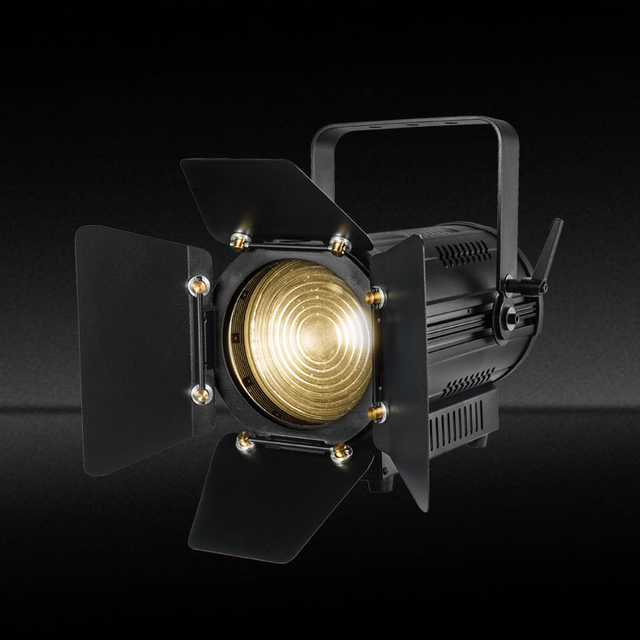
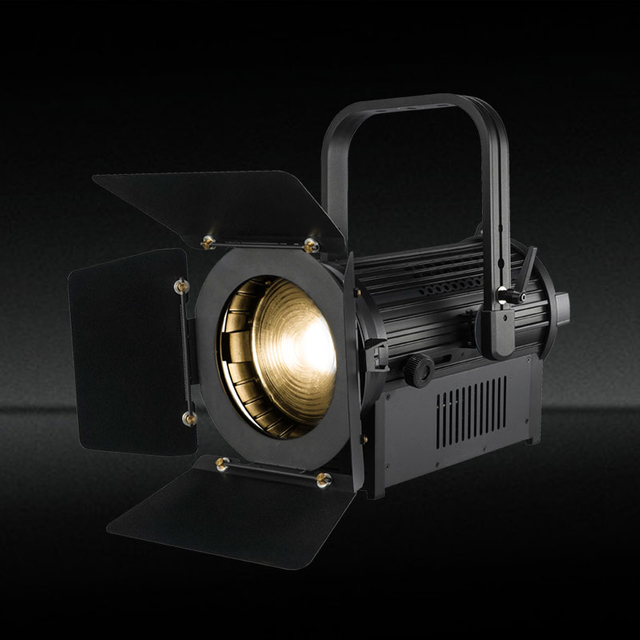
The defining characteristic of a Fresnel fixture is its specialized lens. Utilizing concentric rings of glass or high-temperature polycarbonate, the lens focuses light to create a soft-edged wash that blends beautifully with adjacent fixtures. This soft edge is exactly what makes it superior to the harsh, defined shadows often produced by standard LED par cans.
However, a fixed beam angle severely limits a fixture's utility. Investing in a versatile zoom stage light solves this logistical headache. By manipulating the internal distance between the LED engine and the lens, technicians can dynamically alter the focal point. Take a premium 600W unit as an example. The beam can be narrowed into a tight 15-degree spot to highlight a specific speaker at a podium, or widened into a massive 50-degree flood to wash a large theatrical cyclorama. This flexibility eliminates the need for rental houses to transport and track multiple interchangeable lenses.
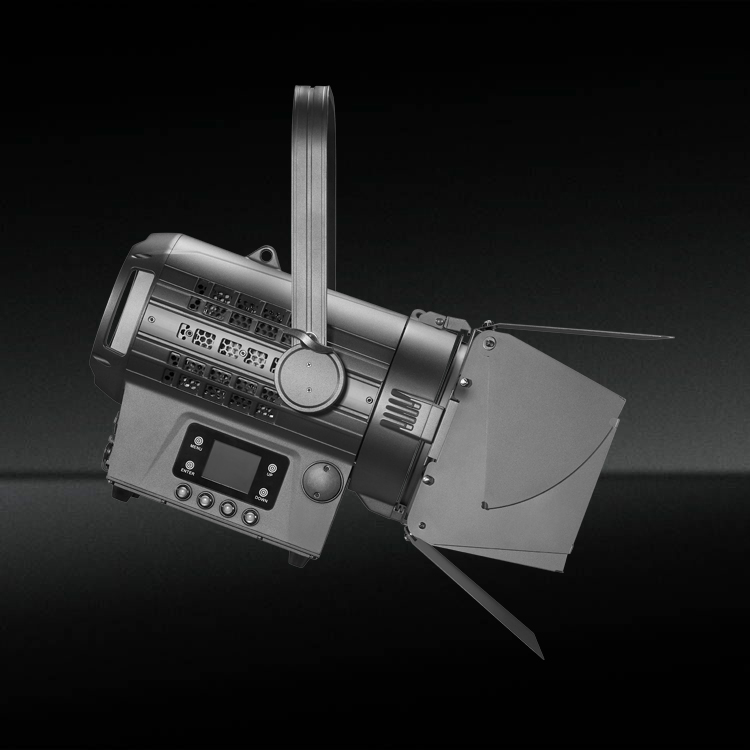
When evaluating fixtures for rental inventories, buyers must decide between manual and motorized zoom mechanisms. Motorized zoom allows the beam angle to be adjusted remotely via DMX control. Lighting designers can change the beam size mid-show to create dramatic visual effects or adjust stage coverage on the fly without ever needing a personnel lift. This specific feature significantly increases the daily rental rate of the unit.
Weather Protection: The ROI of IP65 Fixtures
For outdoor festivals and touring concerts, weather is the ultimate unpredictable variable. Most standard indoor theatre lights offer zero protection against moisture. Using these fixtures outdoors requires the deployment of bulky, expensive, and visually unappealing inflatable rain domes. Nobody wants to bag lights at two in the morning during a torrential downpour.
Procuring a true waterproof Fresnel spotlight dramatically improves the bottom line for production companies. An IP65 rating signifies a highly durable, road-ready fixture. It is completely dust-tight and protected against low-pressure water jets from any direction. This robust engineering ensures the equipment survives heavy rain, high humidity, and the gritty environments typical of summer music festivals.
Beyond outdoor gigs, these sealed fixtures are incredibly valuable for indoor users. Because they are completely sealed against dust, their internal fans and heat sinks do not become clogged with sticky theatrical haze fluid. This keeps the LED engine running cooler and significantly extends the overall rental lifespan of the inventory, leading to fewer bench repairs in the shop.
Actionable Selection Guide for Rental Buyers
Rental equipment endures a tremendous amount of physical abuse. It is bounced down highways in semi-trucks, hung roughly on aluminum trusses, and packed away late at night. Therefore, the physical build quality of a theatre Fresnel is just as critical as its photometric data. When sourcing new inventory, check these critical engineering benchmarks:
Rugged Construction: Astute buyers should look for fixtures constructed from extruded aluminum rather than brittle plastics. Heavy-duty yokes with secure locking mechanisms are required to ensure the light holds its focus even when subjected to heavy stage vibrations from subwoofers.
16-Bit Dimming Technology: Older LED fixtures often suffer from a noticeable flickering or jumping in brightness at the lowest intensity levels. Professional fixtures utilize advanced 16-bit dimming, providing thousands of micro-steps of intensity control. This processing power ensures a perfectly smooth, theatrical fade-to-black.
Acoustic Footprint: Noise pollution is a critical concern during acoustic performances and corporate keynotes. High-output 600W LED engines generate localized heat that must be dissipated. The best stage lights feature intelligent temperature control systems that monitor the thermal load and adjust the fan speed dynamically. Look for a dedicated silent mode that caps the maximum output to ensure the cooling fans remain completely inaudible.
Maximizing the ROI of Your Inventory
One of the most effective strategies for rapidly scaling a rental production company is cross-renting. This is the practice of sub-renting equipment from or to other local production houses to fulfill the massive requirements of a large-scale show.
To facilitate this lucrative revenue stream, inventory standardization is absolutely critical. Rental companies should aim to purchase uniform batches of the exact same fixture model. This discipline ensures that the color calibration, dimming curves, and DMX channel layouts are perfectly matched across the entire lighting rig. Having a standardized inventory of reliable, recognizable fixtures makes your company a highly valuable partner in your regional market.
While LED fixtures require significantly less maintenance than traditional tungsten lights, establishing a routine care protocol ensures they easily reach their promised 50,000-hour lifespan. Technicians should regularly clean the outer optical lens with non-abrasive solutions to maintain maximum light output. Furthermore, DMX ports and power connectors must be inspected for carbon buildup to prevent catastrophic data loss during a live show.
Conclusion
The modern LED Fresnel light has undeniably become the cornerstone of a profitable, adaptable rental inventory. By prioritizing fixtures that offer advanced six-color engines, versatile motorized zoom capabilities, and rugged IP65 waterproof construction, production companies empower themselves to handle absolutely any gig on the calendar. Whether it is a delicate, whisper-quiet theatre play or a rain-soaked outdoor rock concert, having the right gear is paramount.
Upgrading legacy systems to these modern workhorses is no longer just a luxury. It is a strategic necessity for businesses looking to stay competitive, reduce operational friction, and maximize their long-term return on investment. For production managers ready to scale their inventory with professional-grade, road-tested equipment, sourcing dependable rental stage lighting from trusted manufacturers like ONE Studio ensures your next event is executed flawlessly.
Frequently Asked Questions
What is the difference between a theatre Fresnel and a standard LED wash light?
The primary difference lies in the optical lens design. A Fresnel fixture uses a specific lens with concentric glass or acrylic rings to create a soft-edged, highly controllable beam of light. This soft edge blends beautifully with other fixtures without creating hard overlapping lines. In contrast, standard LED wash lights often use multiple exposed LED lenses, which can create harsher light and multiple distracting, colored shadows on a performer's face.
Why is an RGBALC Fresnel light better than a standard RGBW fixture?
Standard RGBW fixtures often struggle to produce certain colors accurately, particularly warm ambers, deep cyans, and natural skin tones, due to missing wavelengths in their emitted spectrum. RGBALC technology adds Amber, Lime, and Cyan emitters to fill in these critical spectral gaps. This results in much richer saturated colors, perfect delicate pastels, and flawless white light that looks completely natural on high-definition television and film cameras.
Can I use a waterproof Fresnel spotlight indoors?
Absolutely. While IP65 fixtures are specifically engineered to survive rain and harsh outdoor elements, they are highly advantageous for indoor use. Their fully sealed housing prevents theatrical haze fluid, pyrotechnic smoke, and general venue dust from entering and coating the internal electronics. This makes them incredibly low-maintenance and highly reliable for indoor theatrical, studio, and corporate applications.
How does a zoom stage light improve rental inventory flexibility?
A fixture equipped with built-in zoom capabilities prevents a rental company from needing to stock, track, and transport multiple interchangeable lenses or entirely different types of fixtures for varying venues. With a smooth optical zoom, a single light can serve as a tight, punchy spotlight for a long throw distance from a balcony, or instantly expand into a wide, even wash for a short throw distance on a small stage, saving significant setup time and warehouse space.
What is the average lifespan of a professional LED Fresnel light?
The LED engine inside a professional-grade fixture typically boasts a lifespan of 50,000 to 70,000 hours before any noticeable lumen depreciation occurs. If the physical hardware is well-maintained and features an IP65 rating to protect the sensitive internal components from corrosive dust and moisture, the fixture itself will easily last for many years of heavy, continuous rental use, providing an excellent return on investment.
How many LED Fresnel lights do I need for a standard 20x20 foot rental stage?
The exact number depends on the required brightness and camera needs, but a standard corporate setup usually requires a minimum of four to six front wash fixtures. Utilizing 600W LED units with a wide zoom capability allows you to cover the entire downstage area evenly with fewer fixtures compared to older, narrower halogen lights. Adding two to four additional units for backlighting will create depth and separate the presenters from the scenic backdrop.
Can modern LED Fresnel fixtures be used with legacy dimmer packs?
No, LED fixtures require constant non-dimmable stage power and receive their dimming instructions via DMX data cables. Plugging an LED fixture into a traditional dimmer pack, even if the dimmer is parked at full power, can severely damage the sensitive internal electronics of the light. Rental houses must transition to relay packs or direct power distribution systems when upgrading their lighting rigs.