How To Choose A Reliable Led Fresnel Light Manufacturer
Views: 3 Author: Site Editor Publish Time: 2026-04-22 Origin: Site


B2B buyers, lighting designers, and procurement managers face a constant, high-stakes dilemma. You must balance strict technical specifications—such as IP65 ratings, seamless zoom control, and DMX integration—against very tight project budgets. Securing high-performance equipment without compromising on long-term reliability is incredibly challenging.
The lighting industry has aggressively shifted away from traditional Tungsten and HMI fixtures toward energy-efficient LED alternatives. Unfortunately, this market boom has a dark side. The supply chain is currently flooded with basic assemblers who pose as true, full-scale manufacturers. These suppliers often ship products looking perfect on paper but failing miserably under real-world stress.
Selecting a reliable led fresnel light manufacturer requires you to move far beyond glossy spec sheets. You must critically evaluate a factory’s in-house R&D capabilities, strict patent compliance, structural repairability, and supply chain transparency. Mastering these evaluation steps ensures your infrastructure investments perform flawlessly for years.
Key Takeaways
Evaluate True Manufacturing Capacity: Look for end-to-end capabilities (in-house SMT, R&D, aging tests) to filter out basic assembly workshops.
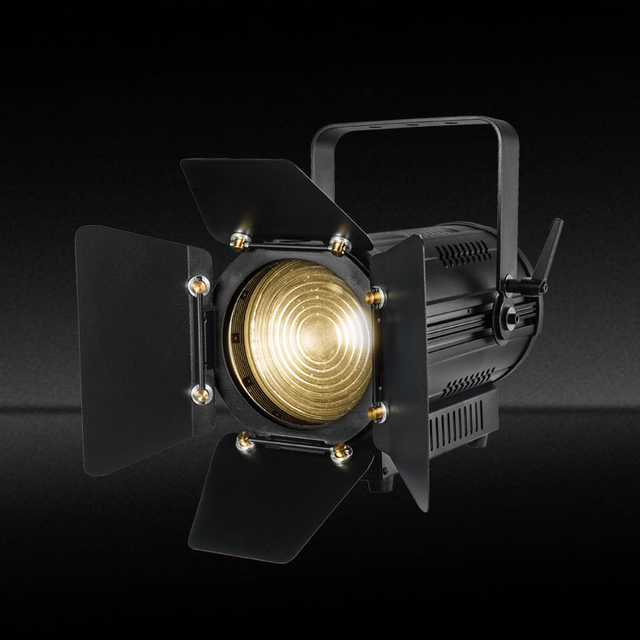
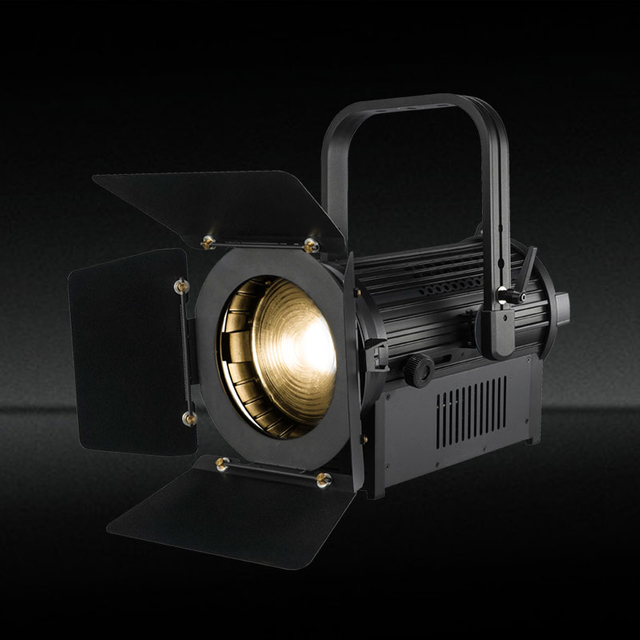
Scrutinize Optical & Physical Build: A quality LED Fresnel Light must feature precise spot control (15°–50° zoom), sturdy barn doors for clean light cutting, and avoid cheap plastic housing.
Demand Compliance & Patent Safety: Require UL/CE/TUV certifications and strict patent compliance to prevent legal liabilities or project teardowns.
Check Business Terms: Standardize expectations around 5–7 year warranties, modular repairability, 15–30 day lead times, and secure 30/70 payment structures.
1. Evaluating Optical Precision and Hardware Realities
You cannot judge a lighting fixture by its lumen output alone. Assessing product engineering standards means looking at how the fixture solves common real-world user pain points on stage and on set.
Zoom Range and Light Cutting Capabilities
Engineers and designers require clean, precise optical performance. A premium Led Fresnel Light must offer a smooth beam angle range. Typically, this spans from 15° to 50°. You should look closely for any distracting "weak spot" or hollow center in the beam. Such dead zones ruin the wash effect and create uneven illumination on your subjects.
Furthermore, you must verify the integration of the barn doors. A common flaw in cheaper models is the inability to cleanly cut light. Low-end fixtures often use flimsy plastic knobs. These cheap components strip, crack, and break after minimal daily adjustments. Robust, all-metal hardware ensures precise light manipulation and survives the daily abuse of stage rigging.
Thermal Management vs. Equipment Weight
LED models run much cooler than old Tungsten units. However, high-wattage versions—especially 150W and above—still demand highly effective heatsinks. Buyers must evaluate how a manufacturer balances equipment weight against cooling efficiency.
Film and stage productions require completely silent active cooling. Quiet fans are essential to avoid ruining expensive broadcast audio recordings. Conversely, some manufacturers use excessively heavy metal housings to passively absorb heat. They do this simply to mask poor thermal engineering. Avoid these bloated, overly heavy designs. They make rigging dangerous and exhaust your crew.
IP65 Outdoor Ratings and Connectivity
Outdoor stages and permanent exterior architectural installations demand genuine IP65 protection. Always ask manufacturers detailed questions about their specific waterproofing processes. Best practices include silicone extrusion sealing, TPU injection molding, and rigorous salt-spray testing to simulate harsh coastal environments.
Additionally, look for professional, secure connectivity standards. You need reliable 3-pin or 5-pin DMX connectors. Powercon In/Thru ports are equally crucial. They enable efficient, secure daisy-chaining across complex rigging setups, saving hundreds of meters of cable.
2. Assessing In-House R&D and Production Capabilities
You must actively differentiate real factory partners from mere white-label trading companies. A trading company simply slaps your logo on generic goods. A true manufacturer controls the entire production ecosystem.
End-to-End Production Ownership
A reliable led fresnel light manufacturer completely owns their production lines. They possess in-house SMT (Surface-Mount Technology) capabilities. They handle their own LED packaging, driver assembly, and final structural casing. This end-to-end control guarantees agile customization when your project requires specific modifications. It also enforces strict quality control across every single production batch.
Component Sourcing Transparency
Trustworthy suppliers openly share their bill of materials (BOM). They do not hide behind unbranded generic components or vague descriptions. You should look for the use of mainstream, reputable LED chips. Cree, Osram, and Nichia represent highly reliable choices. The internal power driver matters just as much. Quality drivers ensure uniform color mixing and prevent premature hardware failure under fluctuating power grids.
Quality Control and Aging Tests
Always ask to see their Standard Operating Procedures (SOPs) for quality control. Do not accept vague assurances or marketing brochures. Mandatory factory criteria must include 24-to-48-hour burn-in and aging tests. Real factories also conduct photometric lab testing using large integrating spheres. Furthermore, they verify their IP ratings using dedicated water and dust chambers.
Consider the differences outlined in the comparison chart below when auditing a supplier's factory capabilities:
Evaluation Criteria | True Manufacturer | White-Label Assembler |
|---|---|---|
SMT & PCB Production | In-house automated lines | Outsourced entirely |
Component Transparency | Provides detailed BOM (Cree, Osram) | Refuses to disclose chip origins |
Aging Process | 48-hour burn-in chamber tests | 1-to-2 hour basic plug test |
Photometric Testing | Owns integrating spheres & labs | Relies on generic supplier data |
3. The Dealbreakers: Certifications, Safety, and Patent Compliance
For commercial contractors and lighting designers, risk mitigation is paramount. Purchasing the wrong fixture can lead to devastating legal and operational consequences.
Global Safety Certifications
Uncertified lighting introduces extreme fire and electrical risks to your venue. Commercial contractors cannot ignore these dangers. Insist on verifiable, up-to-date certificates before signing any purchase order. Important standards include UL, CSA, CE, TUV, and DLC. Ensure these documents match the exact product models you intend to buy. Fake, altered, or expired certificates remain a common trap in overseas procurement.
Intellectual Property and Patent Compliance
Hidden IP infringement creates massive financial risks. This danger is especially prevalent in RGBW color-mixing technologies. If you install non-compliant fixtures, you face serious legal action from patent holders. Courts can mandate complete teardowns of your lighting mid-project. Only partner with a manufacturer guaranteeing strict patent compliance. Trustworthy factories provide clear IP indemnification clauses to protect your business.
Light Health and Photobiological Safety
Optical health matters just as much as electrical safety. Ensure the equipment adheres to strict photobiological safety standards. You must verify low UV emissions to protect performers. Additionally, demand perfectly flicker-free performance. High-speed camera work in film and broadcast requires incredibly stable light. Even a microscopic flicker will ruin an expensive production shoot.
4. Warranty Reality and Project Support Depth
The true value of a supplier emerges after you sign the purchase order. You must evaluate how they handle failures, repairs, and technical integration.
Modular Construction vs. Soldered Systems
Always read the fine print of any warranty agreement. Some companies offer an impressive 5-year warranty. However, they solder all internal components directly together to save manufacturing time. If a single capacitor fails, field repairs become completely impossible. You must prioritize modular designs. When power drivers or LED boards use modular snap-in connectors, technicians can easily swap them on-site. This modularity keeps your stage running without shipping the entire heavy unit back to the factory.
Technical and Engineering Support
A premium supplier operates as an active engineering partner. They do much more than answer basic customer service emails. Look for engineering teams capable of deeply supporting your workflow.
Photometric Data: They should provide native DIALux or IES files for accurate 3D lighting simulation.
Design Assistance: They offer direct access to schematic design support for complex rigging plots.
Rapid Troubleshooting: They maintain fast response times for on-site troubleshooting during live events.
5. Supply Chain Logistics and Procurement Terms
Establishing secure, scalable B2B purchasing parameters protects your capital and your project timelines.
Lead Times and Scalability
Predictable logistics prevent disastrous project delays. You need to establish baseline delivery benchmarks early in the negotiation. A capable factory comfortably handles bulk orders. Their standard lead time usually falls between 15 and 30 days. You should also assess their flexibility. Ask how they accommodate urgent or expedited project timelines. A factory’s ability to quickly scale up production proves their internal manufacturing strength and inventory depth.
Fair Pricing and Safe Payment Structures
Beware of the ultra-low price trap. Unusually cheap quotes almost always indicate stripped-out safety components. They often signal fake IP ratings or rejected LED chips. Protect your capital by negotiating secure B2B payment terms.
Follow these standard financial guidelines for safe procurement:
Negotiate a standard 30% deposit upfront to initiate production.
Arrange for a formal Factory Acceptance Test (FAT) or hire a third-party inspection agency once production concludes.
Only pay the remaining 70% balance before shipment after the inspection yields a fully passing grade.
Conclusion
Sourcing an Led Fresnel Light is a major long-term infrastructure investment, not a quick commodity purchase. The right manufacturing partner delivers true optical precision, bulletproof patent safety, and structural repairability. These vital factors ensure your productions run smoothly, your venues remain safe, and your investments yield high returns over time.
Do not rely on verbal promises alone. Take concrete steps to verify your suppliers today. Request a physical sample fixture for an engineering evaluation. Ask for the factory's ISO17025 lab documentation to prove their testing claims. Use the specific criteria outlined above to ruthlessly audit your current shortlist of suppliers. Taking these strategic actions guarantees a secure, successful, and professional procurement process.
FAQ
Q: When should I choose an LED Fresnel Light over a Leko (Ellipsoidal) fixture?
A: The choice depends on physical distance and beam requirements. Fresnels excel at producing soft, adjustable wash lighting over short to medium distances. They blend light beautifully across stages. In contrast, Lekos are strictly necessary for longer throws. You also need a Leko when projecting sharp gobos or requiring hard-edged beam control.
Q: How much should a professional, IP65-rated LED Fresnel cost?
A: Expect to invest appropriately for professional-grade gear. Demanding high lumen output, true IP65 waterproof protection, motorized zoom, and DMX control for under €400 to $500 is completely unrealistic. These ultra-low price points invariably lead to compromised safety standards, fake ratings, and early hardware failure.
Q: What is the standard lifespan of a commercial LED Fresnel?
A: The industry standard often quotes a 50,000-hour L70 lifespan for the LED chips. However, the fixture's true operational life depends heavily on internal engineering. Superior thermal management heatsinks and the quality of the internal power driver dictate how long the entire light actually survives in demanding environments.