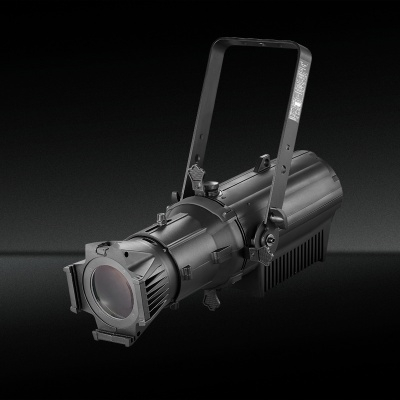
LED Profile Spotlight for Outdoor Stages: How IP65 Protection and Auto Cutting Improve Lighting Control
Views: 0 Author: Site Editor Publish Time: 2026-09-09 Origin: Site


Lighting outdoor stages brings unique weather challenges. Rain, wind, and coastal humidity can easily destroy standard luminaires. This turns a profitable event into a logistical nightmare. You need gear that survives harsh elements without compromising on optical brilliance. Enter the modern LED profile spotlight. By bridging the gap between rugged durability and surgical precision, these fixtures solve the exact problems that have plagued production crews for decades. In this comprehensive guide, we will explore how IP65 ratings and motorized auto-cutting technology are fundamentally shifting stage design.
Key Takeaways
Weatherproof Reliability: IP65-rated fixtures eliminate the need for bulky rain covers, ensuring flawless operation across rain, dust, and high-humidity environments.
Precision Control: Motorized framing shutters controlled via DMX allow lighting designers to shape beams perfectly without requiring technicians to climb dangerous trusses.
Energy and Cost Efficiency: Modern LED engines consume a fraction of the power of traditional halogens while offering superior color mixing and extended longevity.
Versatile Application: These advanced luminaires bring studio-grade quality to outdoor festivals, theme parks, and permanent architectural installations.
Smart Investment: Understanding wattage, zoom ranges, and thermal cooling systems is crucial when purchasing high-end gear for commercial stage use.
What is an LED Profile Spotlight and Why It Matters
The Evolution from Traditional Leko to LED Technology
For decades, the stage lighting industry relied heavily on traditional halogen fixtures to highlight performers and props. These legacy units were notorious for generating immense heat, consuming vast amounts of electricity, and requiring frequent bulb replacements mid-show. Gone are the days of technicians burning their fingers on scorching metal housings. The transition to the modern LED ellipsoidal light has fundamentally altered how lighting professionals approach stage design.
Unlike wash lights that flood an area with soft, diffused illumination, a profile spot utilizes a complex optical lens tube engineered to deliver a hard-edged, highly focused beam. This precision allows the operator to project crisp gobos, create sharp geometric shapes, and isolate specific subjects on stage with pinpoint accuracy. Consequently, production companies now achieve superior lumen output without the thermal hazards and power constraints associated with outdated tungsten lamps.
Bringing Indoor Standards Outdoors
Historically, outdoor events forced lighting designers into a frustrating compromise. Equipment robust enough to survive a sudden downpour often lacked the optical finesse required for high-level theatrical performances. Today, audience expectations have evolved dramatically. Whether attending a massive outdoor music festival or an open-air corporate presentation, attendees expect the exact same high-fidelity theatre lighting precision as an indoor Broadway show.
Modern outdoor fixtures bridge this gap seamlessly. By utilizing high-definition glass lenses and advanced LED engines with high Color Rendering Index ratings, these lights ensure accurate skin tones and vibrant set colors. They successfully bring meticulous indoor standards to the highly unpredictable environment of outdoor stages.
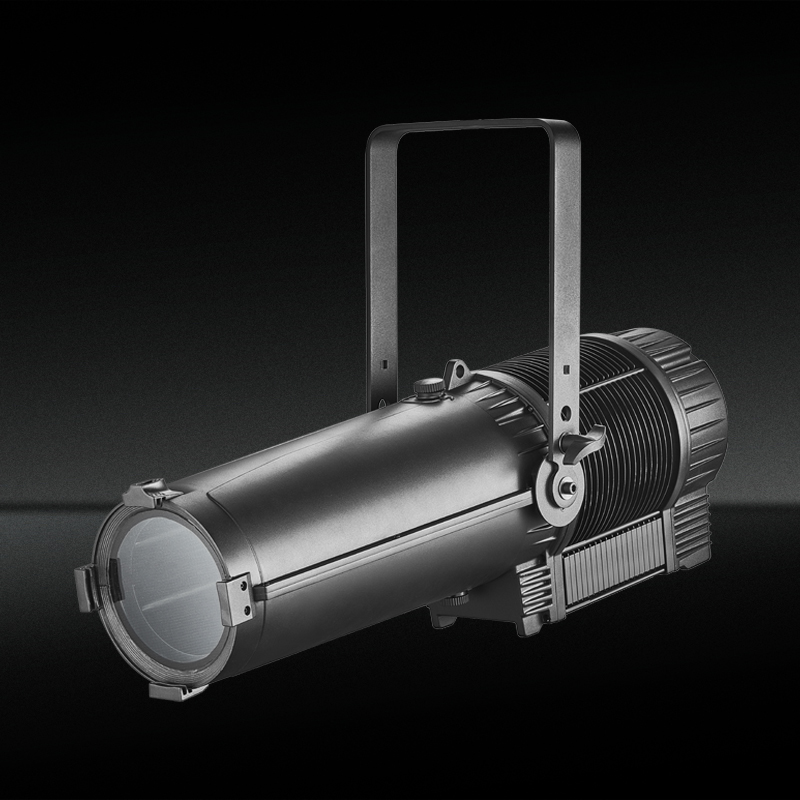
The Critical Role of IP65 Protection in Event Production
Understanding the IP65 Rating: Waterproof and Dustproof
When evaluating equipment for outdoor use, the Ingress Protection rating is the most critical metric. An IP65 rating is not merely a marketing buzzword; it is a standardized, rigorous engineering specification. The first digit, 6, indicates complete protection against dust ingress, meaning the fixture is entirely sealed and no particulate matter can enter the housing. The second digit, 5, guarantees protection against low-pressure water jets from any direction.
For a production crew, this means the luminaire can withstand heavy rainstorms, coastal salt spray, and abrasive desert dust without short-circuiting or suffering optical degradation.
Eliminating the Need for Rain Domes and Enclosures
Before the advent of true IP65 fixtures, crews had to rely on inflatable rain domes or custom-built acrylic enclosures to protect indoor-rated lights. This approach created a massive logistical headache. Rain domes are bulky, require constant generator power for their inflation fans, and significantly increase the rigging weight and wind load on trusses.
Implementing natively weatherproof fixtures eliminates these cumbersome accessories entirely. This saves substantial rigging time during setup and teardown. Furthermore, without plastic domes obstructing the view, the stage maintains a cleaner, more professional aesthetic.
Industry Insight: The Push for Unified Inventory
The live event lighting sector is experiencing a massive paradigm shift. Global market analysis indicates a rapidly growing demand for all-weather, automated luminaires. Driven by increasingly unpredictable climate patterns and a persistent shortage of experienced rigging labor, production companies are actively consolidating their inventories. Instead of maintaining separate, costly stocks for indoor and outdoor shows, buyers are investing heavily in versatile, IP65-rated units. This strategic move ensures high utilization rates. The same sealed fixture can perform flawlessly in a torrential festival downpour one day, and quietly in a corporate ballroom the next.
Mastering Beam Control with an Auto Cutting Spotlight
What is Motorized Framing in Stage Lighting?
Beam shaping is a fundamental requirement in professional lighting design. The motorized framing feature represents a major leap in fixture engineering. An auto cutting spotlight contains an internal module equipped with four independent motorized blades positioned precisely within the focal plane of the fixture.
Through micro-stepping motor control, each blade can be pushed in, pulled out, and angled. Additionally, the entire framing module can typically rotate up to 90 or 180 degrees. This allows the light beam to be sliced into virtually any geometric shape. You can transition from perfect rectangles to sharp triangles, framing scenic elements with absolute surgical precision.
Precision Shaping for Complex Stage Sets
On complex outdoor sets featuring massive LED video walls, projection screens, and multi-level platforms, controlling light spill is paramount. Stray light hitting a projection screen washes out the image. Light spilling into the eyes of the audience ruins the viewing experience.
Motorized framing gives the designer ultimate control over the boundaries of the beam. If a lead singer is standing next to a highly reflective drum kit, the framing blades can be adjusted to cut the light exactly at the edge of the cymbals, illuminating only the performer. This level of precise shaping separates amateur lighting setups from world-class visual productions.
Remote Adjustments via DMX: The Ultimate Time-Saver
If you have ever spent hours in a boom lift manually adjusting shutters, you know the pain. The most significant operational benefit for production companies is the remote operability of these fixtures. In the past, achieving a precise cut required a technician to physically climb a ladder to manually push and pull the framing shutters. If the stage setup shifted by even a few inches during rehearsal, the grueling process had to be repeated.
Specifically, with motorized framing, all blade movements are assigned to DMX channels. The lighting designer can adjust the depth, angle, and rotation of every cut directly from the lighting console at the Front of House. This remote control transforms a dangerous task that used to take hours into a seamless process that takes seconds, drastically reducing labor costs.
Key Benefits of Combining IP65 and Auto Cutting for Outdoor Stages
Uninterrupted Creative Freedom
When IP65 weatherproofing is merged with auto-cutting technology, lighting designers experience unparalleled creative freedom. Previously, intricate lighting plots requiring sharp gobos and precise framing were strictly reserved for indoor arenas due to the unreliability of using complex fixtures in the rain. Now, designers do not have to compromise their artistic vision. They can deploy heavily textured, dynamic lighting designs with the absolute confidence that the instruments will perform flawlessly, regardless of the weather forecast.
Rapid Setup and Teardown for Touring Productions
Touring productions operate on incredibly tight schedules. The window between unloading the trucks and the start of the show is often just a few hours. The combination of weather readiness and remote DMX framing dramatically accelerates the rigging and focusing phases. Crews no longer waste precious time installing rain covers or sending climbers up the truss to manually focus beams. The lights are simply hung, patched, and immediately focused from the ground.
LED Technology vs. Traditional Halogen Options
Energy Efficiency and Heat Reduction
Power management is a critical logistical factor for outdoor events, which typically rely on rented diesel generators. Traditional halogen fixtures draw massive amounts of power, often 750W to 1000W per unit. A standard rig of 50 halogen lights requires substantial generator capacity and heavy-duty, expensive cabling.
In contrast, a modern LED engine achieves equivalent or superior brightness using only 300W to 600W of power. This drastic reduction in amperage allows production companies to run more fixtures on smaller generators, saving significantly on fuel costs. Moreover, LEDs produce minimal forward heat. This keeps performers comfortable on stage and prevents the melting of specialized gobos.
Advanced Color Mixing and Output Quality
Historically, technicians spent hours on scissor lifts fiddling with physical sheets of colored polycarbonate known as gels. These gels degraded rapidly under intense heat and UV exposure, restricting the fixture to one color per show unless a noisy mechanical color scroller was attached.
Modern LED profiles feature advanced color mixing engines, including Red, Green, Blue, Amber, and Lime, or CMY systems. These sophisticated systems synthesize millions of colors seamlessly via DMX control. Furthermore, high-end LEDs maintain a Color Rendering Index of over 90. This ensures that costumes look vibrant and skin tones appear natural on high-definition broadcast cameras.
| Specification | Traditional Halogen Profile | Modern LED Profile Spotlight |
|---|---|---|
| Power Draw | 750W - 1000W | 200W - 600W |
| Light Source Lifespan | 300 - 2,000 Hours | 50,000 - 100,000 Hours |
| Color Generation | Physical Gels (Fades quickly) | Digital RGBW/RGBAL Mixing |
| Heat Output | Extremely High (Burn risk) | Low (Managed by internal cooling) |
| Dimming Curve | Smooth, but shifts warm | Perfectly linear, color remains stable |
Buyer’s Guide: Actionable Specs for Outdoor Fixtures
Wattage and Lumen Output for Large Stages
When investing in commercial lighting equipment, selecting the correct engine power is vital. You need to look beyond basic wattage. For instance, a high-quality 300W IP65 Ellipsoidal equipped with an auto-cutting system is often the sweet spot for mid-to-large stages. You want a 300W LED engine that delivers punchy output rivaling legacy 1000W halogen units. For massive stadium festivals where fixtures are mounted on towers hundreds of feet away, buyers should evaluate actual lux measurements at specific throw distances rather than relying on raw wattage alone.
Zoom Range and High-Definition Optics
When evaluating an outdoor profile spotlight, the optical system dictates the quality of the light beam. Buyers should prioritize fixtures with smooth, motorized zoom capabilities. A versatile zoom range, such as 15° to 30°, allows a single unit to serve multiple purposes. It can act as a tight, long-throw spot or a wide, stage-washing profile.
Additionally, the quality of the glass lenses must be scrutinized. High-definition, anti-reflective optics ensure a crisp beam edge without chromatic aberration, which causes distracting color fringing around the borders of the light.
Construction, Cooling Systems, and Noise Levels
An outdoor fixture must be built like a tank. Die-cast aluminum housings are non-negotiable for professional-grade lights, providing both structural integrity and efficient heat dissipation. While IP65 fixtures are completely sealed from the outside environment, they still require robust internal thermal management.
Buyers must assess the cooling system. Smart, waterproof fan systems that adjust their speed based on the LED temperature are ideal. Even though the fixture operates outdoors, excessive fan noise can be highly problematic during quiet theatrical moments or orchestral performances. Therefore, fixtures offering silent modes or low-decibel operation are highly recommended.
Top Applications for Weatherproof LED Stage Lights
Open-Air Concerts and Music Festivals
At large music festivals, the elements are entirely unpredictable, yet the show must go on. Utilizing a weatherproof LED Leko light allows designers to provide crucial face lighting for artists from the Front of House truss. Their high output punches through ambient daylight and atmospheric haze, while the auto-cutting features ensure the lead singer is highlighted without blinding the first row of the audience.
Theme Parks and Architectural Illuminations
Theme parks and permanent architectural installations require fixtures that can be mounted and left outdoors 365 days a year. An IP65 profile spotlight is the perfect low-maintenance solution for projecting logos onto castle walls, illuminating pathways, or highlighting specific architectural features. The sealed optical chamber prevents the ingress of insects and dirt, meaning maintenance crews do not have to frequently rent boom lifts to clean internal lenses.
Outdoor Theatre and Live Broadcasts
Outdoor theatrical productions demand the nuance of indoor lighting combined with rugged durability. These productions heavily rely on subtle color mixing and precise beam shaping. Furthermore, because many of these events are recorded or broadcast live, the fixtures must offer adjustable Pulse Width Modulation frequencies. This ensures completely flicker-free operation on high-speed cameras, maintaining pristine broadcast quality regardless of the setting.
Conclusion
Lighting outdoor stages requires durable, intelligent tools. An IP65 LED profile spotlight delivers exactly that, combining robust weather protection with surgical beam control. By upgrading to these advanced fixtures, production companies save significant money on power consumption and routine maintenance. Setup times drop drastically for touring crews, and auto-cutting features give designers total creative freedom without the fear of weather-related failures. Investing in reliable, all-weather fixtures is no longer a luxury—it is an absolute necessity for modern event production.
If you are ready to upgrade your lighting inventory and eliminate weather-related failures, it is time to invest in professional-grade equipment. Explore the high-performance lighting solutions at The One Studio to find the perfect IP65 LED Profile Spotlight tailored for your next major production.
Frequently Asked Questions
What is the difference between an LED Profile Spotlight and a Wash light?
A wash light is designed to flood a large area with a soft, diffused spread of light, making it ideal for base stage illumination or background coloring. In contrast, an LED Profile Spotlight utilizes a complex optical lens system to produce a hard-edged, highly controllable, and concentrated beam. This precision allows it to project sharp gobo patterns, cut light perfectly around set pieces, and highlight specific performers without light spilling into unwanted areas.
Can an IP65 outdoor profile spotlight be used indoors?
Absolutely. These fixtures are incredibly versatile and are frequently used for indoor events. While they are engineered to survive harsh outdoor weather, their high-quality optics, precise color mixing, and remote framing capabilities make them perfect for indoor theatrical applications as well. Most professional IP65 models feature selectable silent cooling modes, ensuring that fan noise does not disrupt quiet indoor performances or corporate keynote speeches.
How does the auto cutting feature work via DMX?
The auto cutting feature relies on an internal module containing four individual metal blades. Each blade is connected to micro-stepping motors. By assigning specific DMX channels to these motors, a lighting operator can remotely adjust the insertion depth and angle of each blade from the lighting console. The entire framing module can also typically rotate, allowing the designer to create complex geometric shapes without ever needing to touch the physical fixture.
What is the lifespan of an outdoor LED Leko light?
Professional-grade LED engines are designed for exceptional longevity, typically lasting between 50,000 to 100,000 hours of operational use before experiencing significant lumen depreciation. The IP65 rating actually helps protect this lifespan. Because the internal housing of the fixture is completely sealed against dust, moisture, and corrosive elements, the electronic components and delicate optical lenses do not suffer from the environmental degradation that frequently ruins non-rated fixtures used outdoors.
Are LED ellipsoidal lights bright enough for daytime outdoor events?
Yes, provided you select a fixture with an appropriate wattage. High-wattage LED profiles produce massive lumen outputs that can easily cut through ambient daylight. These high-output fixtures are standard for daytime festival stages, where they are used for crucial front-of-house face lighting to ensure performers are clearly visible to the audience and properly exposed for live broadcast cameras.
How do you maintain an IP65 rated fixture?
Maintenance for IP65 fixtures is significantly easier than for non-rated lights. Because the optical chamber is sealed, dust and moisture cannot reach the internal lenses or LED engine. Routine maintenance generally involves wiping down the exterior glass lens with a non-abrasive cloth and mild optical cleaner, and ensuring the external heat sinks and waterproof cooling fans are clear of debris. You rarely need to open the fixture casing, which saves hours of labor.
Can you use custom gobos in a motorized framing spotlight?
Yes, most professional auto-cutting spotlights feature a dedicated gobo slot alongside the motorized framing module. You can insert standard metal or custom glass gobos to project complex logos, textures, or scenic patterns. Because modern LED engines produce very little forward heat compared to traditional halogens, you can safely use intricate glass gobos or even specialized plastic gobos without the risk of them melting during a long show.