What Features Should You Check Before Buying an LED Fresnel Light?
Views: 1 Author: Site Editor Publish Time: 2026-08-09 Origin: Site


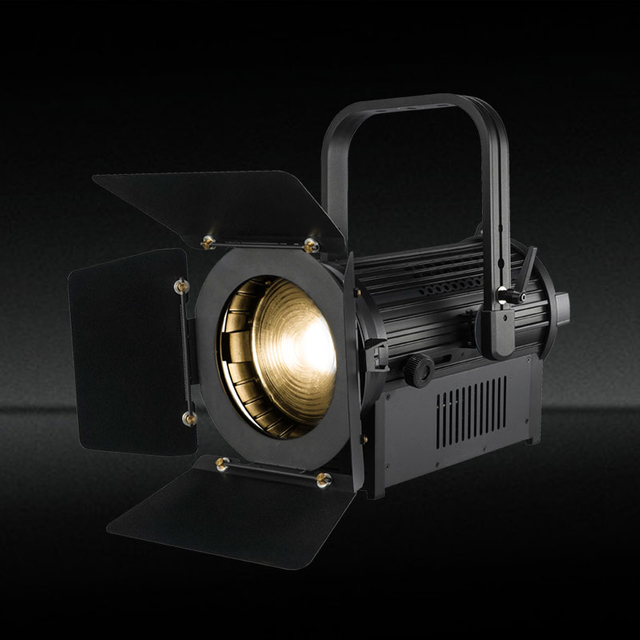
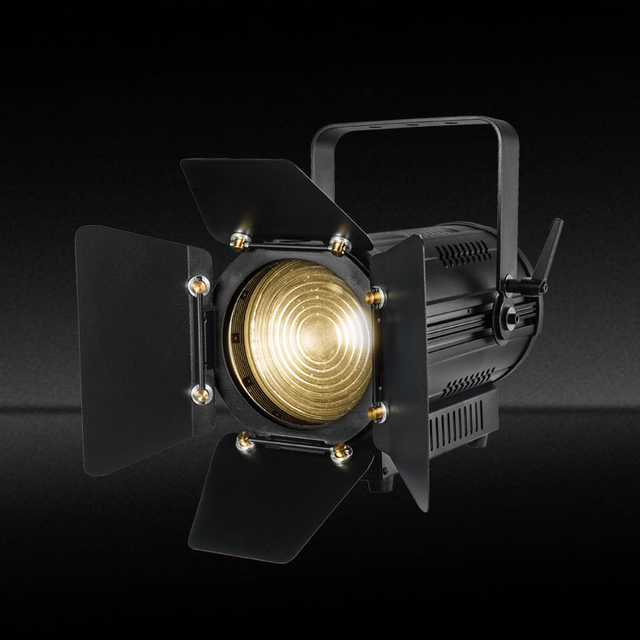
Transitioning to modern LED technology or upgrading studio equipment requires more than just matching wattage. It requires matching exact optical precision. While LED panels provide broad wash lighting, a dedicated Led Fresnel Light is essential for controlled, focusable, and directional illumination. You need this precise control across film, broadcast, and theatrical applications. Purchasing the wrong fixture inevitably results in severe production roadblocks. You might face inconsistent color rendering, requiring incredibly expensive post-production correction. Worse, you could experience unacceptable audio interference from cheap cooling fans or premature hardware failure during a live broadcast. This guide breaks down the verifiable technical specifications you must evaluate. We will detail the mechanical features you need to check carefully. Understanding these elements helps you make an informed, professional-grade purchasing decision for your production environment.
Key Takeaways
- Optical Precision is Paramount: Do not rely on wattage alone; evaluate photometrics (lux at specific distances) and verifiable color accuracy (CRI/TLCI > 95, specifically R9 values).
- Acoustics Matter as Much as Optics: In sound-sync environments, fan noise (measured in dB) and thermal management systems are critical dealbreakers.
- Workflow Integration: True professional fixtures require seamless dimming curves (flicker-free) and industry-standard control protocols (DMX512/RDM).
- Build Quality Equals ROI: Evaluate the yoke strength, barn door mechanics, and housing materials to gauge long-term durability on set or in the grid.
Framing the Decision: Why Choose a Professional LED Fresnel?
Studios and theaters constantly face intense pressure to reduce daily power consumption. They must also minimize heat output to lower expensive HVAC operational costs. However, production crews still demand the crisp shadows and precise beam control previously offered by traditional tungsten or HMI fixtures. This creates a challenging business problem for equipment buyers. You must balance energy efficiency against uncompromising light quality.
Comparing available solutions reveals distinct operational differences. LED panels offer excellent soft, diffused light. They work wonderfully for base illumination or filling large areas. However, panels completely lack serious throw distance. They also fail to provide distinct shadow definition. In contrast, a Professional LED Fresnel utilizes a classic stepped lens design. This optical glass or acrylic lens provides a variable beam angle. The operator can shift the beam smoothly from a tight spot to a wide flood. This mechanism creates the hard, controllable shadows necessary for precise key lighting. It allows cinematographers to achieve distinct subject separation from the background.
A successful equipment purchase strictly matches your specific operational environment. Location shoots demand lightweight durability and fast deployment. Conversely, permanent studio grids require robust control integration, heavy-duty rigging, and remote management capabilities. You must define your primary use case before reviewing specification sheets.
Best Practice: Always audit your current studio power grid capacity before upgrading. Even though LEDs draw less power, calculating your total amperage overhead prevents future electrical bottlenecks when expanding your lighting plot.
Verifying Optical Performance and Color Accuracy
Top-line marketing claims often obscure actual optical performance. You must demand raw data and understand how to interpret it. The quality of the light emitted dictates the quality of your final image.
Color Rendition Metrics (CRI, TLCI, and R9)
Avoid accepting a blanket "High CRI" marketing claim. You must demand verifiable testing data showing both CRI and TLCI over 95. The Television Lighting Consistency Index (TLCI) represents a more accurate metric for modern digital camera sensors. It evaluates how the camera interprets the light, rather than how the human eye sees it.
Pay specific attention to the R9 (Red) value. This specific metric dictates how accurately your camera reproduces human skin tones. Cheap LEDs frequently score well on average CRI but fail miserably on the R9 spectrum. They often skew green or magenta, destroying the natural look of your subjects. Correcting this green shift in post-production costs valuable time and money.
Beam Angle and Zoom Range
Evaluate the mechanical zoom range carefully. A standard professional fixture typically sweeps from 15° to 50° or more. Check for a smooth, stepless spot-to-flood transition. The internal carriage should move effortlessly along its tracks.
The projected beam must maintain complete evenness without light spill. You also want to avoid beam distortion around the edges of the projected circle. This optical aberration, often called halation, ruins precise lighting cuts when using barn doors. High-quality lenses eliminate chromatic aberration at the beam edge.
True Output (Lux vs. Wattage)
Wattage indicates power draw from the wall. It never accurately measures actual brightness. You must evaluate the photometric data directly. Look closely at Lux or Footcandles measured at realistic working distances.
Compare outputs at 3 meters and 5 meters. This data gives you a genuine understanding of how the light performs on a real soundstage. A poorly optimized 300W fixture might actually project less usable light at 5 meters than a highly optimized 200W fixture with superior optics.
Common Mistake: Never judge a light's output by looking directly into the lens. Our eyes automatically adjust to bright sources. Always use a dedicated light meter to measure the actual footcandles hitting your subject.
Photometric and Color Metric Baselines for Studio Setup
| Feature Category | Acceptable Minimum Standard | Professional Ideal Standard |
|---|---|---|
| CRI (Color Rendering Index) | > 90 | > 95 |
| TLCI (Television Lighting Consistency) | > 92 | > 97 |
| R9 Value (Red Reproduction) | > 80 | > 90 |
| Beam Angle Range | 20° to 45° | 15° to 55° (Stepless) |
| Dimming Resolution | 8-bit (256 steps) | 16-bit (65,536 steps) |
Thermal Management and Acoustic Output (The Hidden Dealbreakers)
High-output LEDs generate significant internal heat right at the diode level. This heat slowly degrades the phosphor coating over time. Such degradation leads directly to unwanted color shifts. Evaluating the thermal management system is absolutely critical for equipment longevity.
Active cooling systems use internal fans. Passive cooling relies entirely on heatsinks. Evaluate the heatsink design carefully. Extruded aluminum always outperforms cheaper metals and high-impact plastics. Aluminum draws heat away from the sensitive electronics rapidly. Better heat dissipation guarantees a longer lifespan for the LED engine.
If the fixture uses active cooling, verify the exact decibel (dB) rating. A light might look optically perfect on paper. However, it becomes utterly useless on a quiet soundstage if its fan whines during dialogue scenes. Microphones pick up everything. Look for fixtures featuring a dedicated "Silent Mode." Advanced fan-speed controls prove incredibly useful. They let you prioritize audio quality, even if the system slightly caps maximum light output to prevent overheating.
Control Protocols and Dimming Curves
Modern studio environments demand sophisticated control networks. Your lighting fixtures must integrate seamlessly into these digital ecosystems. Outdated control systems cause frustrating delays during live broadcasts or fast-paced film shoots.
Flicker-Free Performance
Broadcast and cinematic workflows require absolutely flawless execution. The Pulse Width Modulation (PWM) frequency must be exceptionally high. High PWM prevents visible flickering when shooting at high frame rates. It also ensures clean images when using very high shutter speeds. Do not compromise on this feature for any professional video production. Lower PWM frequencies create rolling bands of darkness across your camera monitor.
Dimming Resolution
Check the manufacturer specifications for advanced 16-bit dimming. The visual transition from 0% to 1% and up to 10% should be imperceptibly smooth. You should never see sudden brightness steps. The color temperature must remain absolutely stable at these exceptionally low intensities. Standard 8-bit dimming causes a noticeable "pop" when fading a light up from zero, which ruins theatrical fade-ins.
Integration Capabilities
Verify the exact presence of standard 5-pin or 3-pin DMX in/out ports. These connections allow seamless lighting console control. Assess the availability of RDM (Remote Device Management). RDM saves massive amounts of time. It allows technicians to change DMX addresses and check fixture temperatures remotely from the ground.
App control via Bluetooth or Wi-Fi offers optional but highly valuable flexibility. Run-and-gun crews benefit heavily from mobile app control. It allows independent operators to tweak key light intensity without walking away from the camera.
Mechanical Build, Rigging, and Hardware Ecosystem
A fixture hanging 20 feet above a stage floor must be mechanically flawless. You cannot risk equipment failures above actors or expensive sets. Build quality dictates your daily operational safety.
A heavy light will inevitably droop if the yoke locks use poorly machined materials. You must ensure the clutch or friction discs can hold steep angles securely. They need to maintain position permanently, even when holding heavy modifiers like large softboxes or snoots. Check the yoke clearance as well. The light must tilt fully downwards without the rear housing hitting the yoke frame.
Evaluate the exterior housing materials closely. Extruded aluminum housing offers superior physical durability. It survives the daily abuse of rental houses and busy film sets. It also drastically improves passive heat dissipation compared to cheaper plastic alternatives.
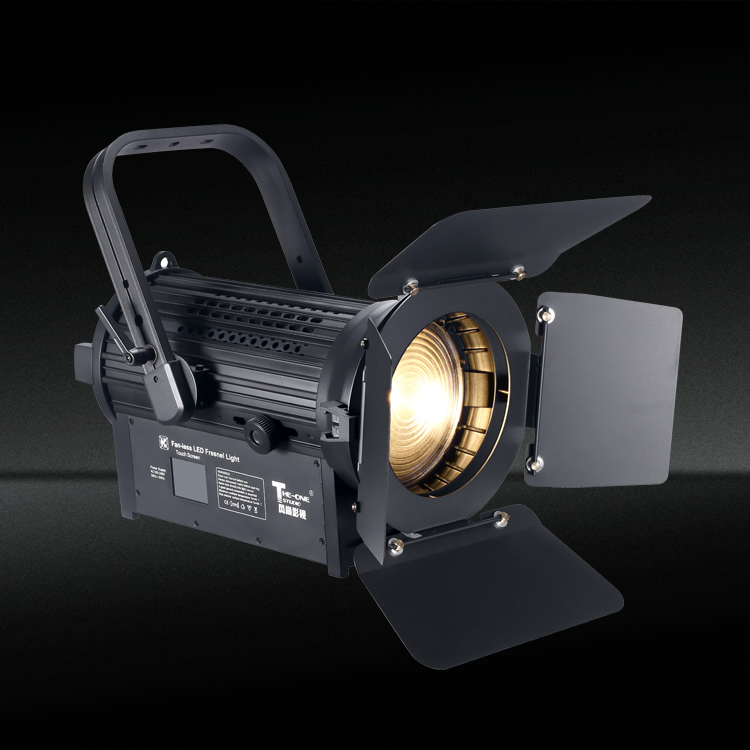
Consider accessory and modifier compatibility before purchasing. Check if the fixture features an industry-standard Bowens mount or an Arri-style accessory ring. Proprietary accessory slots limit your future options severely. Ensure robust, metal barn doors come included in the kit. If they are not included, make sure you can source them easily. Barn doors are strictly mandatory for shaping a Fresnel beam.
Shortlisting Logic and Implementation Risks
Navigating the equipment market requires a defensive purchasing strategy. You must actively mitigate risks before signing purchase orders. Beware of extremely cheap, unbranded imports flooding the market. They usually lack reliable local warranty support. They also frequently skip vital certified electrical safety ratings. You must look for authentic CE, RoHS, UL, or ETL certifications. Skipping these poses severe fire risks and major liability issues for your studio.
Implement a strict testing protocol before making any bulk purchases. Following a structured testing method prevents costly mistakes.
- Request or rent a demo unit directly from the supplier or a local rental house.
- Test the light against your specific camera sensors. Use your daily lenses to check for hidden green shifts. Your naked eyes often miss what a digital cinema sensor catches instantly.
- Measure the beam output at your exact standard working distances using a calibrated light meter.
- Run the fixture at 100% intensity for two straight hours. This stress test reveals true thermal throttling behavior. It also exposes the maximum fan noise levels when the internal heatsinks reach peak capacity.
- Test the dimming curve by executing a slow, 30-second fade from 100% down to 0% while recording video. Watch the footage for any color temperature shifts or sudden light drops near the bottom end.
Best Practice: Always assign one senior lighting technician to evaluate demo units. Their practical on-set experience often reveals mechanical flaws, such as awkward locking knobs or poorly placed power inputs, that spec sheets never mention.
Conclusion
Selecting the right fixture requires looking well past top-line wattage numbers. You must closely scrutinize color accuracy, particularly the critical R9 values. Advanced dimming curves and solid mechanical reliability carry equal importance in professional environments. We strongly recommend prioritizing fixtures that offer verifiable photometric reports and robust thermal management. Silent operation and extruded aluminum build quality ensure a highly reliable return on investment for your studio. As a next step, gather detailed photometric data sheets from top-tier brands. Always request a physical demo unit to test directly on your specific camera sensors before finalizing any major equipment upgrades.
FAQ
Q: How do I verify if an LED Fresnel actually has a CRI over 95?
A: Request the manufacturer's official photometric or spectrometer test reports. On set, professionals use a reliable color meter (like a Sekonic) to measure the exact CRI, TLCI, and R9 values before shooting.
Q: Can an LED Fresnel replace a 1000W Tungsten light?
A: Yes. Generally, a high-quality 150W to 200W LED Fresnel can match or exceed the lux output of a traditional 1000W tungsten fixture, while drawing significantly less power and generating a fraction of the heat.
Q: What is the difference between a Fresnel light and an LED panel?
A: Panels emit a broad, soft wash of light that is difficult to shape. Fresnels use a glass or acrylic lens to focus the beam, allowing for sharp shadows, precise cutting with barn doors, and long-distance throws.
Q: Why is fan noise an important feature to check?
A: In professional video production, audio quality is paramount. A loud cooling fan on an LED fixture can bleed into boom microphones, ruining dialogue and requiring costly audio repair in post-production. Look for fanless designs or ultra-low dB ratings.