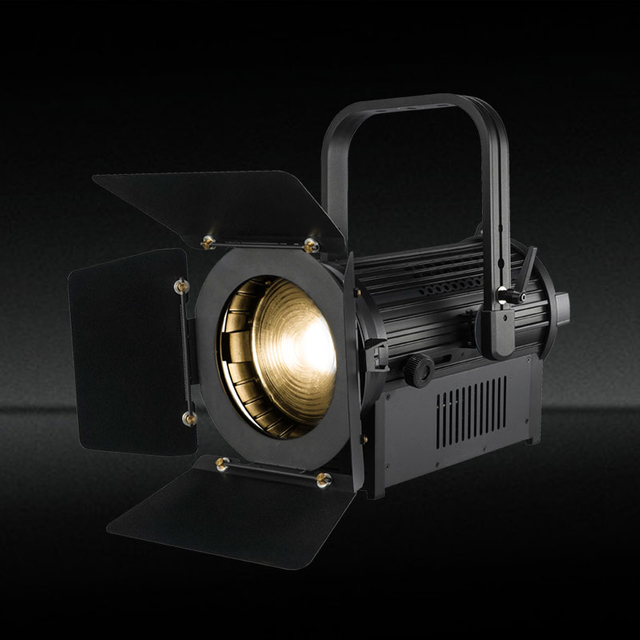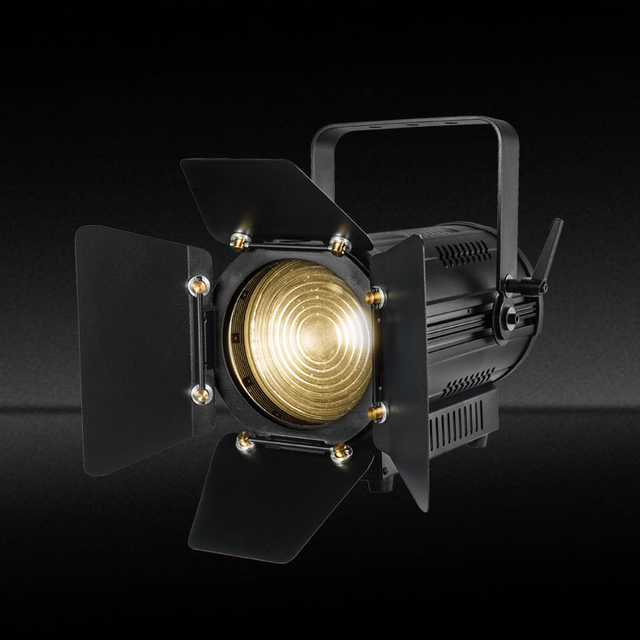
What Color Temperature Options Are Available for an LED Fresnel Light?
Views: 0 Author: Site Editor Publish Time: 2026-08-08 Origin: Site


The transition from traditional tungsten halogen fixtures has fundamentally changed professional lighting choices. You no longer simply select a standard wattage for your rig. You must carefully configure the exact light engine inside the unit. Choosing the wrong color temperature significantly limits a fixture’s usability on set. It also drastically increases your physical gel expenditure. Furthermore, poor color choices create massive color grading bottlenecks during post-production. This guide offers a practical, evidence-based evaluation of color temperature configurations. We will thoroughly explore modern LED options to help directors of photography, gaffers, and studio integrators spec the perfect fixtures. You will learn the core differences between single-color, variable, and full-spectrum models. Ultimately, we will show you how to align these critical decisions directly with your daily production workflow needs.
Key Takeaways
- Fixed-color LED Fresnels (Tungsten 3200K or Daylight 5600K) offer the highest photometric output and punch per dollar for highly controlled, single-source environments.
- A Bi Color Fresnel Light provides the best operational versatility for run-and-gun or mixed-lighting setups, though typically at a 20-30% reduction in peak output compared to single-color models of the same wattage.
- Full-spectrum (RGBW/RGBAL) Fresnels offer ultimate color control and gel emulation but require rigorous testing for CRI/TLCI consistency and often carry a higher price point and complex control interfaces.
- Decision logic should prioritize your most common shooting environment, existing legacy lighting grid, and post-production workflows.
The Three Primary Color Temperature Configurations for an LED Fresnel Light
Defining the core solution categories helps you align your lighting inventory with strict budget constraints. You must also evaluate your primary use cases. A permanent studio wash requires a vastly different tool than dynamic location shooting. Let us examine the three main configurations you will encounter when sourcing an Led Fresnel Light.
Fixed Single-Color (3200K Tungsten or 5600K Daylight)
Single-color fixtures utilize LED chips dedicated entirely to one color temperature. You generally choose between a warm 3200K or a cool 5600K.
- Pros: This setup maximizes raw output (lux) per watt. They boast simpler thermal management. These units are highly cost-effective compared to complex alternatives. They provide seamless integration into legacy tungsten theater grids.
- Cons: You get zero on-the-fly adaptability. You must use physical CTO or CTB gels to match mixed ambient lighting. Adding physical gels inherently cuts your light output by a significant margin.
Variable White / Bi-Color (Typically 2700K to 6500K)
These units blend two sets of diodes to achieve different color temperatures across a specific spectrum.
- Pros: You gain instant dialing capabilities to match practicals or shifting sunlight. This totally eliminates the need for physical color correction gels. A Bi Color Fresnel Light proves highly efficient for fast-paced location work where time equals money.
- Cons: The unit features dual LED chipsets. This means you only use half the available diodes at extreme ends of the color spectrum, limiting maximum brightness.
Full Spectrum / RGBW / RGBAL (Expanded CCT from 1800K to 10,000K+)
Advanced color engines add red, green, blue, amber, and sometimes lime or cyan diodes to create a massive color gamut.
- Pros: They offer ultimate flexibility. You gain precise green and magenta shift control. Most units feature built-in digital gel libraries that emulate standard Rosco or Lee filters perfectly.
- Cons: They carry the highest cost per watt. The sheer complexity of the color engine can introduce minor spectrum spikes. If the unit lacks proper calibration, you will see lower TM-30 scores in cheaper models.
Output vs. Versatility: Evaluating the Bi-Color Output Penalty
You must address the physical limitations of LED chipsets to set realistic performance expectations. Evaluating this features-to-outcomes dynamic helps you avoid underpowering your set.
The Power Distribution Reality
Manufacturers cannot cheat physics. A 200W variable white fixture must divide its internal power capacity. It typically houses 100 watts of daylight diodes and 100 watts of tungsten diodes. If you set the light to pure 5600K, only the daylight diodes illuminate. You effectively utilize just half of the instrument's potential wattage. Blending them at a midpoint (around 4300K) often yields a slight output bump, but it still falls short of a dedicated single-color fixture.
Lux Comparison and Workflow Impact
A dedicated 5600K single-color LED Fresnel will consistently meter much higher at a three-meter distance. It outperforms a variable fixture set to 5600K within the exact same wattage class. Buyers must weigh their need for raw punch against operational speed. If you frequently push a key light through heavy diffusion or bright windows, you need single-color punch. If you constantly turn a dial to match ambient room light, you need variable versatility.
Table: Estimated Relative Output Comparison (200W Class Fixtures at 3 Meters)
| Fixture Type | Color Setting | Relative Output (Lux) | Best Use Case |
|---|---|---|---|
| Single-Color (Daylight) | 5600K | 10,000 lux | Punching through windows, heavy diffusion. |
| Bi-Color Fixture | 5600K | 7,000 lux | Matching cool ambient daylight on location. |
| Bi-Color Fixture | 4300K (Mixed) | 8,200 lux | Mixed ambient environments. |
| Bi-Color Fixture | 3200K | 6,800 lux | Matching practical incandescent lamps. |
Assessing Color Rendition Quality (CRI, TLCI, and TM-30)
Your chosen color temperature option must never compromise skin tone accuracy. It must also ensure strict camera sensor compliance. Technical evaluation separates professional fixtures from consumer-grade toys.
Beyond Basic CRI
Standard CRI (Color Rendering Index) evaluates how a light renders eight pastel colors compared to an ideal source. Standard CRI (Ra) is largely insufficient for modern evaluation. It completely ignores saturated reds (R9), which dictate accurate skin tones. You must look beyond CRI. Outline the necessity of checking TLCI (Television Lighting Consistency Index). Broadcast professionals rely on TLCI because it evaluates color directly through the lens of a digital camera sensor.
TM-30 Metrics
The TM-30 standard provides the most comprehensive color evaluation available today. You must evaluate two specific numbers: Rf (Fidelity) and Rg (Gamut). Fidelity measures how closely colors match a reference source. Gamut measures the increase or decrease in color saturation. High-quality fixtures maintain highly stable TM-30 scores across their entire CCT range. You want an Rf above 92 and an Rg hovering right around 100.
Green and Magenta Shift
Cheap variable white units present a major risk. Poorly calibrated RGBW fixtures often drift into green or magenta tints. This drift ruins skin tones and requires expensive post-production correction. Always look for fixtures featuring +/- Green adjustment capabilities. This feature allows you to perfectly match existing fluorescent practicals or older LED panels on your set.
Matching Color Temperature Options to Production Environments
Applying an expertise lens helps you match the technology to specific professional environments. Different sectors prioritize different operational metrics.
Broadcast News & Small Studios
We highly recommend a Bi Color Fresnel Light for broadcast environments. It delivers crucial adaptability to varying anchor complexions. News sets frequently update their scenic designs and practical lighting. You can adapt to evolving set designs instantly without re-hanging or re-geling lights. This flexibility saves countless hours between live segments.
Theatrical & Stage Lighting
Theatrical venues heavily favor fixed 3200K Tungsten LEDs. Stage designers need to emulate legacy halogen looks seamlessly. Integrating 3200K LED options allows them to match older conventional fixtures perfectly. This transition preserves the artistic vision while drastically reducing HVAC cooling loads and overall power consumption.
Commercial & Narrative Filmmaking
Cinematographers typically deploy a hybrid approach. We recommend high-wattage single-color Daylight fixtures for pushing massive key light through windows. You can then supplement these key lights with Full Color (RGBAL) units. These full-spectrum lights provide precise, gel-free ambient washes. This combination delivers maximum punch and maximum creative control simultaneously.
Implementation Risks, Pitfalls, and Shortlisting Logic
Adopting new lighting technology carries inherent risks. You must test your chosen fixtures against real-world operational hazards before making a bulk purchase.
Implementation Risks
Dimming curves often reveal a fixture's true build quality. Ensure the color temperature remains completely stable when you dim the light below 20%. Inferior chips shift color wildly as their voltage drops, ruining low-light scenes. Flicker rates represent another massive pitfall. Variable CCT engines must maintain high PWM (Pulse Width Modulation) frequencies. High PWM ensures flicker-free performance when you shoot at high camera frame rates or use fast shutter speeds.
Shortlisting Logic
Follow a structured approach to narrow down your purchasing options.
- Audit existing gear: What is your baseline CCT? Determine if you are trying to match modern daylight panels or legacy tungsten halogen pars. Your new units must blend with your current inventory.
- Determine the primary role: Define the light's job. If it acts as a primary key light, prioritize single-color punch or a very high-wattage bi-color unit. If it serves as a fill or hair light, prioritize variable versatility to tweak edge colors easily.
- Establish ROI criteria: Calculate your historical gel savings. Measure the setup-time reduction when pitching a dual-color unit over a cheaper single-color model. Present these concrete operational savings to management.
Every set demands a unique balance of speed and power. Mapping these requirements early prevents costly mid-production equipment swaps.
Conclusion
Lighting professionals must navigate a core trade-off when selecting fixtures. You can choose maximum output with single-color units. You can choose maximum workflow speed with variable bi-color engines. Alternatively, you can choose ultimate creative control with full RGBW systems. No single fixture does everything perfectly without compromise. We advise buyers to formally request photometric data sheets and comprehensive TM-30 reports. Review these documents for the exact CCT settings you plan to use most frequently. Always perform this due diligence before committing to a final purchase order.
FAQ
Q: Can a bi-color LED Fresnel produce the exact same look as a traditional tungsten fixture?
A: Premium models with high R9 values and warm CCT ranges (2700K-3200K) are virtually indistinguishable on camera, but budget models may lack the deep red spectrum required for true tungsten emulation.
Q: Does changing the color temperature on an LED Fresnel affect the beam angle?
A: No. The spot/flood mechanism relies on the physical distance between the LED COB and the glass Fresnel lens; color temperature changes happen electronically at the diode level.
Q: Is it better to buy a daylight LED Fresnel and use CTO gels, or just buy a bi-color light?
A: If you need maximum brightness 90% of the time, buy daylight and gel it. If you change locations or match ambient light daily, the time saved by a bi-color fixture easily justifies the slight output loss.
Q: What is the standard lifespan of the LEDs inside a variable color Fresnel?
A: Most commercial-grade fixtures rate their L70 lifespan (time until the light loses 30% of its initial output) at 30,000 to 50,000 hours, regardless of the color temperature configuration.