How To Choose The Right LED Profile Spotlight For Theaters?
Views: 13 Author: Site Editor Publish Time: 2026-06-03 Origin: Site


Upgrading your theatrical lighting to LED technology promises significant returns. You reduce HVAC loads and save massive amounts of energy. However, evaluating these modern fixtures goes far beyond comparing basic spec sheet lumens. Lighting designers face unique technical challenges when transitioning away from traditional tungsten sources. Choosing the wrong fixture often leads to disastrous results mid-performance. You might face delayed dimming curves, distracting fan noise during quiet dramatic scenes, or muddy Gobo projections. These technical flaws completely shatter audience immersion and ruin delicate theatrical moments.
To avoid costly mistakes, you need a highly reliable framework. We will help you evaluate optical clarity, color science, acoustic performance, and operator ergonomics before you commit any venue budget. You will learn how to match wattage to throw distance accurately and ensure your lighting rig performs silently. Read on to discover the exact criteria for selecting professional lighting upgrades.
Key Takeaways
A theater-grade LED profile spotlight requires a minimum CRI of 90, with zero-latency, stepless dimming.
Match wattage to throw distance: 150W handles black-box theaters, while 300W+ is required for large proscenium Front-of-House (FOH) positions.
Fan-less or ultra-low noise cooling systems are mandatory to preserve auditory immersion.
Total Cost of Ownership (TCO) heavily favors modular fixtures with field-replaceable LED engines and standard DMX/RDM compatibility.
Venue Throw Distance vs. Output: Sizing Your LED Profile Spotlight
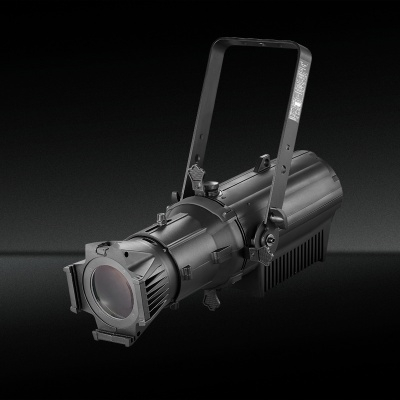
Raw lumen claims often mislead buyers in the professional lighting market. You cannot rely on source output alone when planning a rig. Instead, calculate the actual lux arriving at your specific throw distance. A high-lumen fixture using poor optics wastes light through rapid beam spread. When choosing a Led Profile Spotlight, matching wattage to venue size prevents both under-lighting and wasted power. Sizing properly ensures your actors remain visible without blowing out their features or causing eye strain.
Wattage Benchmarks for Theaters
Different venues demand drastically different output levels. Overpowering a small room causes aggressive bouncing light, while under-powering a large hall leaves actors in the shadows.
Small to Medium Venues: Black box theaters, intimate clubs, and small studio spaces typically require 150W to 200W fixtures. These units provide ample punch for short throws ranging from 15 to 30 feet. They keep the grid lightweight and manageable for small crews.
Large Theaters: Front-of-House (FOH) positions demand 300W or higher output engines. These powerful units must penetrate heavy stage washes from overhead lighting. They often throw light across 50 to 100 feet of audience seating, requiring intense center-beam brightness.
Lens Selection: Fixed vs. Zoom
You must decide between fixed and zoom lens configurations. Each offers specific advantages for theatrical rigs. The physical laws of optics dictate performance trade-offs.
| Lens Type | Optical Efficiency | Edge Sharpness | Ideal Application | Venue Flexibility |
|---|---|---|---|---|
| Fixed Beam (e.g., 19°, 26°, 36°) | High (Fewer glass elements absorb less light) | Extremely sharp, minimal chromatic aberration | Dedicated long-throw FOH or permanent wash positions | Low (Requires physical tube swapping) |
| Zoom Beam (e.g., 15°–30°, 25°–50°) | Moderate (More glass elements cause slight light loss) | Variable, heavily dependent on focal adjustments | Repertory grids needing constant refocusing | High (Adjusts to different throws instantly) |
Placement Realities
When hanging these units, prioritize steep angles for FOH placements. Flat angles blind your performers on stage. They also cast highly distracting shadows directly onto scenic backdrops. A 45-degree vertical and horizontal angle remains the industry standard for natural face illumination. It models the human face perfectly, carving out cheekbones while keeping shadows on the floor.

Optical Precision and Color Science: Beyond the Spec Sheet
Illuminating human faces requires exceptional color rendering. A basic specification sheet rarely tells the whole story about light quality. You need a minimum Color Rendering Index (CRI) of 90 for any theatrical application. Furthermore, high Television Lighting Consistency Index (TLCI) ratings remain non-negotiable for recorded or broadcast performances. Broadcast cameras easily detect green color spikes invisible to the naked eye. Poor rendering makes skin tones look unnatural, pale, or slightly green. You lose the emotional warmth of the performance.
The Halogen Transition
Transitioning from traditional halogen brings specific color challenges. Theaters often struggle to match legacy gel colors like deep ambers or saturated blues. You should evaluate fixtures based on their native color temperature range. A warm 3000K engine mimics traditional tungsten beautifully. It provides a familiar, nostalgic glow perfect for historical dramas. Conversely, variable RGBAL (Red, Green, Blue, Amber, Lime) systems offer massive flexibility for modern designs. The critical addition of amber and lime diodes fills the spectral gaps left by basic RGB units. This allows you to mix perfect pastels and warm whites.
Edge Acuity and Gobo Projection
Edge acuity separates premium optics from cheap alternatives. You must test for chromatic aberration at the edges of the beam. Look for unwanted blue or orange fringing when hitting a white wall. A quality Led Profile Spotlight delivers crisp, pure edges. Ensure the internal shutters cut clean lines across the stage floor without barrel distortion. You should see absolutely no glowing "halo" effects around your Gobo projections. A sharp Gobo projection creates convincing window frames, leaf textures, or geometric patterns.
Operator Ergonomics and Dimming Performance (Field Realities)
Field realities often expose a fixture's true build quality. Lighting operators interact with these units daily, making ergonomics just as critical as light output.
Dimming Curve Latency
Dimming latency remains a major pitfall among lower-tier LED units. You might experience the dreaded "douser delay." This visible mechanical or digital lag happens during quick blackout cues. You may also notice distracting stepping at the bottom 10% of the dimming curve. Cheap processors struggle to calculate low light values smoothly. Theater applications absolutely require 16-bit smooth dimming processors. They guarantee seamless fade-outs mimicking the gentle thermal decay of a tungsten filament.
Heat Management on the Yoke
Heat management affects your crew directly. LED chips run significantly cooler than old halogen bulbs. However, large internal heat sinks can still make rear housing handles uncomfortably hot after hours of use. You must assess handle ergonomics carefully. Operators need to adjust fixtures safely without burning their hands. Poor thermal design slows down focus sessions and creates safety hazards for technicians working on tall ladders.
Mechanical Smoothness
Mechanical smoothness matters just as much for live operations. You might occasionally use these static units as a makeshift follow spot. Evaluate the yoke bushing friction during your testing phase. Pan and tilt movements must feel buttery smooth. Jerky mechanics ruin live lighting adjustments. Heavy, poorly balanced fixtures cause operator fatigue. When evaluating balance, consider how the fixture behaves when you add a heavy zoom lens to the front.
Acoustic Constraints: The "Silent" Dealbreakers
Ambient noise easily ruins dramatic tension. In intimate theatrical settings, silence is crucial. You must evaluate the cooling mechanisms before purchasing a fleet of new lights. A grid full of whining fans distracts your audience from the dialogue. Theater consultants often demand strict NC (Noise Criteria) ratings for professional spaces.
Passive and Fan-less Cooling
Fan-less designs offer absolute zero noise. They rely entirely on large aluminum heat sinks and advanced heat pipes to dissipate thermal energy. They are ideal for low-ceiling studios, broadcast rooms, and acoustic black box spaces. Keep in mind they usually feature lower wattage output due to strict thermal limits. A fan-less design cannot push 300 watts without melting the internal diodes.
Intelligent Active Cooling
Higher output engines require active cooling fans. Look for smart fans dynamically adjusting their speed based on internal temperature sensors. Advanced fixtures allow manual "silent mode" overrides via DMX control. This ensures fans stay whisper-quiet during critical monologues or acoustic musical numbers. You can push them back to full cooling mode during loud musical transitions. Always listen for high-pitched motor whining, which penetrates human hearing much easier than the low hum of moving air.
Evaluating Modularity and System Integration
Smart purchasing decisions look beyond the initial installation. You must evaluate how the equipment integrates into your existing facility systems. Long-term reliability depends heavily on hardware architecture.
Modular vs. Sealed Designs
Opt for modular designs whenever possible. Fixtures allowing on-site swapping of LED engines save major headaches. If a single diode array fails, you only replace that specific module. Sealed designs force you to replace the entire heavy unit, wasting budget and time. Lens tubes should also interchange easily. This modularity allows you to swap a 19-degree lens for a 36-degree lens without buying a completely new light body.
Facility Infrastructure Benefits
Factor in broader facility integration benefits. Upgrading to LED lowers venue HVAC strain significantly. Traditional tungsten rigs pump massive amounts of heat into the room, forcing air conditioning systems into overdrive. LED units keep the room cooler for the audience and the performers. They also eliminate the endless operational cycle of managing burnt-out color gels and fragile halogen lamps.
Control Protocol Standards
Verify control protocol compatibility before buying. You need native DMX512 support for standard console integration. RDM (Remote Device Management) compatibility is equally vital. RDM allows your technicians to address fixtures centrally from the lighting desk. It also feeds back real-time temperature data and operating hours. You avoid dragging out a heavy ladder just to change a single DMX address.
The Shortlisting Framework: How to Test Before You Buy
Never commit your venue budget based solely on marketing specification sheets. You must run physical evaluations in your actual space. Use the "shootout" method to test equipment accurately. Request demo units from two or three shortlisted brands. Hang them on your grid and observe them under real conditions.
Side-by-Side Evaluation Checklist
Use this rigorous checklist during your theatrical shootout:
Test the dimming curve carefully from 5% down to 0%. Run this alongside a traditional tungsten fixture to compare the fade decay.
Insert a complex, intricate metal Gobo pattern into the slot. Check the projected edges for color separation or spherical barrel distortion.
Push the fixture to 100% output. Leave it running for 30 minutes to let the thermal management system engage fully.
Measure the audible fan noise from one meter away. Listen specifically for high-pitched motor noise.
Feel the rear handles and yoke knobs for excessive heat buildup after the runtime test.
Test color mixing consistency by programming a slow fade from deep blue to amber. Watch for harsh jumps in the color spectrum.
Conclusion
Selecting the perfect theater fixture requires balancing multiple competing technical factors. You cannot compromise on performance when live audiences are watching.
Optical purity ensures sharp Gobos and highly natural skin tones on stage.
Acoustic discretion preserves the immersion of quiet, delicate scenes.
Modular hardware designs provide long-term reliability and easy maintenance.
Proper wattage selection prevents washed-out stage plots and saves energy.
Your next step is to audit your current throw distances. Map out your precise FOH power availability. Build a hard specification sheet based on these concrete metrics. Only then should you contact vendors to request physical demo units for your venue shootout.
FAQ
Q: What is the difference between a Fresnel and an LED profile spotlight?
A: A Fresnel fixture provides soft-edged wash lighting suitable for blending areas. A profile spotlight produces sharp-edged, highly controllable beams. It includes internal shutters for precise light cuts and supports Gobo projection for textured patterns.
Q: Can an LED profile completely replace a 750W halogen fixture?
A: Yes. A high-quality 200W to 300W LED engine easily matches or exceeds the output of a traditional 750W halogen. Upgrading significantly reduces heat emission and power consumption without sacrificing brightness or color quality.
Q: Why is my LED spotlight dimming in "steps" instead of smoothly?
A: Stepped dimming occurs due to low-resolution 8-bit processing. It limits the fixture to only 256 steps of brightness. Professional theater applications require 16-bit dimming processors to achieve perfectly smooth, invisible fade-to-blacks.
Q: Do I need a fixed lens or a zoom lens for theater?
A: Fixed lenses offer better optical clarity and sharper edges at a lower unit cost. Zoom lenses provide essential flexibility for multi-purpose venues. They allow operators to adjust beam angles quickly without swapping physical lens tubes.