Can An LED Profile Spotlight Produce Gobo Projections?
Views: 2 Author: Site Editor Publish Time: 2026-06-10 Origin: Site


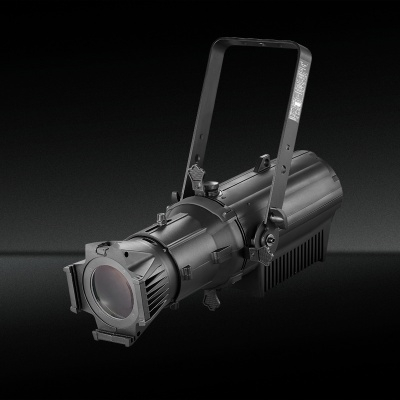
Yes. An Led Profile Spotlight is not only capable of gobo projections, but it has become the industry standard for theatrical, architectural, and event projection. Transitioning away from traditional tungsten-halogen fixtures to LED engines has fundamentally shifted how venues handle customized lighting. Buyers evaluating projection solutions need to balance optical sharpness, thermal management, color rendering, and control protocols without over-specifying or under-powering their rig.
You cannot simply buy the brightest fixture and expect flawless results. Today, professionals demand precision and reliability for complex visual displays. In this guide, you will discover the optical mechanics driving these modern fixtures. We will explore material options, procurement standards, and actionable troubleshooting techniques. You will learn exactly how to ensure perfect image clarity every time you power up your rig.
Key Takeaways
Thermal Advantage: LED profile spotlights emit almost no infrared (IR) heat, safely allowing the use of high-resolution glass and inexpensive plastic film gobos that would melt in older fixtures.
Optical Precision: Operating like a "camera in reverse," profile fixtures use internal focal planes to project razor-sharp edges and complex textures.
Procurement Standard: Reliable evaluation requires checking High-CRI (≥90) output, photometric data (IES/LDT) against ambient light, and lens focal length ratios.
ROI & Scalability: For mobile operators (like DJs or event production), monogram and logo projections offer rapid return on investment through up-sell opportunities.
The Optical Mechanics: Why Profile Spotlights Excel at Projection
To understand projection quality, we must examine the internal physics of the fixture. Basic floodlights and fresnels push light outward in a generic wash. They lack the structural components necessary for image reproduction. A profile spotlight behaves entirely differently. It utilizes a highly structured internal light path to control beam geometry.
The "Reverse Camera" Principle
Think of this system as a camera working in reverse. A camera lens takes ambient light and focuses it onto a tiny internal sensor. Conversely, a profile fixture takes a tiny internal light source and projects it outward. The fixture focuses its LED engine onto an internal image plane. We call this plane the gobo gate. A specialized lens assembly sits in front of this gate. It gathers the illuminated image and projects it onto an external surface. As long as you maintain the mathematical ratio between the lens and the gate, your projected image remains incredibly crisp.
Edge Control and Framing
High-quality projections require strict edge control. You do not always want a perfectly circular light beam. Operators frequently need to adapt the projection to fit unique architectural elements.
This is where manual framing shutters become invaluable. These four distinct metal blades sit just ahead of the focal plane. Operators physically push them into the light beam. You can crop the beam into precise geometric shapes. This allows you to mask off stage props, avoid spilling light onto audience seating, and create striking, razor-sharp squares.
Focal Length Realities
Lens selection directly dictates projection size and intensity. You must choose your barrel based on venue constraints.
Short Focal Lengths: These lenses range from 36° to 50°. They produce wider beams and massive images over short distances. However, they suffer from rapid brightness drop-off. Light scatters quickly over a wide area.
Long Focal Lengths: These lenses range from 5° to 19°. They produce narrow, highly concentrated beams. They maintain remarkable brightness over long throws. They project small but intensely sharp images across massive arenas.
How LED Technology Expanded Gobo Material Options
Historically, custom projections brought a specific set of headaches. Traditional discharge and halogen bulbs generate immense thermal energy. They create intense focal-point heat right where the image sits.
The Problem with Tungsten
Older fixtures operated at blistering temperatures. This extreme heat limited users drastically. You could only use simple, low-resolution steel templates. If a client demanded intricate colors, you had to purchase highly expensive, heat-treated dichroic glass. Even then, glass gobos frequently cracked mid-show due to sudden temperature shifts.
The LED Thermal Shift
Modern engineering solved this thermal crisis. An Led Profile Spotlight creates light through electroluminescence. It does not project infrared (IR) thermal energy forward through the lens tube. The LED chip generates heat backward into a heatsink, while the focal slot remains vastly cooler. This thermal shift opened the door for entirely new, cost-effective materials.
Material Trade-offs in LED Fixtures
Event producers now enjoy a spectrum of media options. You must weigh cost against resolution for every project. Below is a rapid comparison chart to guide your material selection.
| Material Type | Durability | Resolution | Ideal Application |
|---|---|---|---|
| Steel | Extremely High | Low | Basic silhouettes, simple shapes, long-term installations. |
| Glass (B&W) | Medium | High | Intricate typography, complex greyscale shading. |
| Dichroic Glass | Medium | Highest | Full-color corporate logos, photo-realistic imagery. |
| Plastic Film | Low | High | One-off events, rapid custom printing, low-budget gigs. |
Note: Plastic and transparency films remain strictly viable in LED fixtures. A tungsten lamp will melt them instantly.
Evaluation Criteria: Specifying an LED Profile Spotlight for Gobo Use
You face dozens of specifications when evaluating a new fixture. Selecting the right unit requires looking past marketing buzzwords. You need empirical data to ensure your projections punch through existing room lighting.
Brightness vs. Ambient Light
Do not rely solely on wattage. Wattage measures power consumption, not output efficiency. You must evaluate output using standardized photometric charts. Request IES or LDT files from the manufacturer. These files map the exact lux delivered at specific target distances. Your goal is simple. The lux hitting your projection surface must comfortably exceed the venue's ambient lighting footprint.
Color Accuracy and Mixing Systems
Color rendering capabilities dictate how professional your projection looks. Different applications require vastly different color systems.
For Corporate Logos: Brand managers demand absolute precision. You must check color temperature matching. Hitting an exact brand hex code requires balancing cold white (9500K) against warm white (3200K) options.
For Theatrical Use: Look closely at CRI (Color Rendering Index) and TLCI (Television Lighting Consistency Index) ratings. You need a score of ≥90. This ensures accurate skin tones and natural rendering on broadcast cameras.
Additive vs. Subtractive Mixing: Understand the difference in mixing paradigms. Additive mixing (RGB/RGBW) is cost-effective. It produces highly saturated colors perfect for vibrant event washes. Subtractive mixing (CMY) is generally preferred for smooth theatrical transitions and accurate tungsten emulation.
Zoom vs. Fixed Lenses
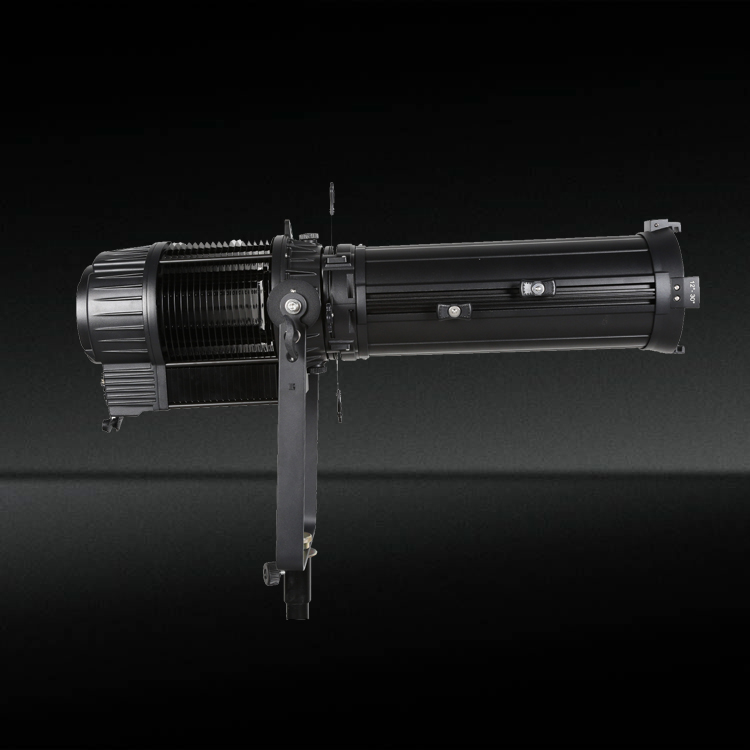
Your optical barrel choice impacts overall output. Fixed lenses offer maximum light transmission. They contain fewer moving glass elements, preventing internal light bounce. Conversely, variable zoom lenses (such as a 15°–40° barrel) offer immense flexibility. They suit multi-purpose venues perfectly. However, this flexibility comes at the cost of slight light loss through the complex lens array.
Integration and Scalability for Venues and Operators
Purchasing a great fixture is only the first step. You must ensure it integrates seamlessly into your existing infrastructure. Modern workflows demand intelligent communication and efficient power distribution.
Networking and Protocols
Ensure your chosen fixture supports contemporary digital workflows. Standard DMX allows basic control over dimming and color. However, RDM (Remote Device Management) compatibility is crucial for permanent installations. RDM allows technicians to interact bi-directionally with the fixture. You can re-address units, check thermal status, and adjust settings directly from a lighting console. This eliminates the need to deploy ladders or scissor lifts just to change a DMX channel.
Daisy-Chaining Power
High-volume deployments require smart power management. Imagine lighting a massive cathedral or a sprawling corporate hall. Running individual power cables for every unit creates chaotic, hazardous workspaces. Evaluate fixtures featuring locking power pass-through connectors. This allows you to daisy-chain power directly from one fixture to the next, drastically minimizing cable runs.
Business ROI
For mobile entertainers, DJs, and production companies, these fixtures represent rapid revenue generation. Investing in a lightweight, high-output LED profile spotlight enables the sale of "Monogram Packages." You can project a couple's initials at a wedding or a sponsor's logo at a gala. This turns a single hardware purchase into a high-margin recurring service.
Implementation Risks: Troubleshooting Gobo Projections
Even the best equipment encounters physical reality. Projecting light across three-dimensional space introduces geometry problems. You must anticipate these challenges to deliver flawless results.
The Keystoning Effect
Projections look perfect when hitting a surface straight on. However, projecting at a steep angle creates severe distortion. A perfectly circular logo stretches into a warped oval. We call this the keystoning effect. Fixing it requires either physical alignment corrections or digital intervention. Professional gobo fabricators can mathematically pre-distort the artwork file. When the distorted glass projects at an angle, the image corrects itself into a perfect circle on the wall.
Inverted Projections
We see one operator error more frequently than any other. New technicians often project logos completely upside-down. Remember the reverse camera principle? The internal optics invert the image before it leaves the lens. Therefore, you must insert the physical gobo upside-down and backward into the fixture's gate. It feels counterintuitive, but it guarantees a correct image on the wall.
Condensation and Environmental Protection
Never use standard indoor fixtures outside. Outdoor architectural projections demand a strict IP65 rating. This ingress protection standard guarantees defense against dust and low-pressure water jets. Using an indoor-rated fixture outside invites immediate condensation. Lens fogging ruins the projection edge, and moisture eventually causes complete electronic failure.
Maintenance Best Practices
Consistent maintenance preserves optical clarity. Follow these essential guidelines:
Replace standard degree lenses with smaller, tighter barrels if you need punchier projections over long distances.
Clean internal reflectors regularly to maintain maximum lumen output.
Strictly use non-ammonia solutions for lens cleaning. Harsh chemicals will strip the delicate anti-reflective coatings right off the glass.
Conclusion
An LED profile spotlight is the definitive tool for gobo projection. It successfully marries brilliant optical precision with crucial thermal safety. This technology easily supports the high-resolution media required for modern events. You no longer have to worry about melting expensive materials or sacrificing edge sharpness.
Before making your next purchase, follow these critical next steps:
Calculate the exact throw distance of your venue to determine the correct lens barrel.
Request detailed IES photometric files from manufacturers to verify ambient light dominance.
Standardize your inventory around specific gobo sizes (such as industry-standard 50mm or 26.8mm) to ensure cross-compatibility across all your hardware.
FAQ
Q: Why is my gobo projection upside down and backwards?
A: Profile fixtures use a convex lens system that creates optical inversion. The light path crosses over itself inside the barrel before projecting outward. To compensate for this physical reality, you must insert your physical media upside-down and inverted into the gate.
Q: Can I use a plastic film gobo in any spotlight?
A: No. You can only safely use plastic or transparency film in modern LED fixtures. Traditional tungsten halogen lamps generate intense infrared heat at the focal point. This extreme thermal energy will instantly melt and ignite plastic film.
Q: What size gobo do I need for an LED profile spotlight?
A: Sizes are entirely proprietary to the fixture's specific gate dimensions. The industry commonly uses 'A', 'B', or 'M' size standards, alongside specific millimeter diameters like 50mm or 26.8mm. Always check your exact user manual before ordering custom media.
Q: How do I fix a blurry projection edge?
A: A blurry edge means the image sits outside the optical focal plane. You fix this by adjusting the lens barrel. Slide the barrel forward or backward relative to the gobo gate. This shifts the focal plane until the edges become razor-sharp.