What are the different types of LED spotlights?
Views: 13 Author: Site Editor Publish Time: 2025-10-29 Origin: Site


When you explore stage lighting, you encounter several main types of LED spotlights. These include LED profile spotlights, Fresnel spotlights, PAR spotlights, moving head spotlights, and follow spots. Each spotlight plays a unique role in theater lights and event productions. Wash lights give you even illumination, while beam lights create dramatic effects. LED profile spotlights stand out for their precision, making them a popular choice among types of theater lights. Many productions now use LED spotlights because they offer energy efficiency, long life, and creative flexibility. You benefit from lower energy costs, reduced maintenance, and safer lighting environments.
Key Takeaways
LED profile spotlights offer precise control over light placement, making them ideal for highlighting actors and scenery in theater productions.
Fresnel spotlights provide a soft-edged beam, perfect for creating gentle washes and avoiding harsh shadows on stage.
PAR spotlights deliver powerful illumination with adjustable beam angles, making them versatile for both focused and broad lighting needs.
Follow spots are manually operated to track performers, ensuring they remain brightly lit during dynamic performances.
Moving head spotlights allow for 360-degree rotation and color changes, providing dynamic lighting effects for concerts and events.
LED Profile Spotlights
Features
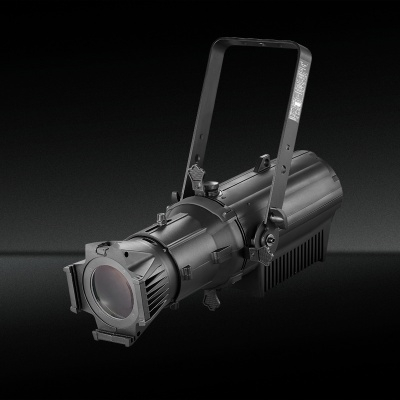
You often hear the term led profile spotlight when discussing stage lighting. This type of stage lighting fixture, also known as a leko led profile spotlight, ERS, or profile spotlight, plays a key role in theater productions. The table below shows the definition and alternate names used in professional lighting:
Definition of LED Profile Spotlight | Alternate Names in Professional Lighting Terminology |
|---|---|
A stage lighting fixture that uses a leko reflector to collect and direct light through a lens barrel. | Also referred to as Leko, ERS (Ellipsoidal Reflector Spotlights), or Profile Spotlights. |
A led profile spotlight uses advanced optical systems to focus light with great precision. You can choose between fixed or zoom lenses, depending on your needs. The leko led profile spotlight allows you to shape the beam, control its size, and even project patterns or images using gobos. The following table explains how each component works:
Component | Function |
|---|---|
Optical System | Similar to a slide projector, allows for beam shape alteration. |
Movable Lens Elements | Enable focusing and zooming of the light beam. |
Shutters | Shape the beam at the internal focal point. |
Iris | Controls the size of the beam's circle. |
Gobos | Create specific patterns of light and shadow when inserted into a slot. |
Applications
You use led profile spotlights for theater to highlight actors, scenery, or specific areas on stage. These spotlights give you sharp, defined beams and let you adjust the intensity and focus. The table below outlines common uses in stage lighting and theater productions:
Application Type | Description |
|---|---|
Focused Beam Projection | LED profile spotlights are essential for projecting specific patterns or focusing light on stage elements. |
Flexibility in Lighting | They offer unmatched flexibility with adjustable shutters and lenses for creating focused beams. |
Sharp Beam Definition | Ellipsoidal Reflector Spotlights (ERS) provide sharp, defined beams adjustable for intensity and focus. |
Energy Efficiency | LED profile spotlights enhance energy efficiency and color flexibility for precise beam control. |
Follow Spot Functionality | Modern LED profile spotlights can track moving performers, ensuring consistent illumination. |
Beam Control | They allow for hard or soft edge creation and precise beam shaping with framing shutters. |
You often see the stage led profile spotlight used in concerts, plays, and other types of theater lights. These spotlights help you create dramatic effects and direct attention exactly where you want it.
Advantages
When you choose a theater led profile spot light, you gain several benefits over traditional incandescent spotlights:
LED profile spotlights for theater last much longer, with a lifespan of 40,000 to 100,000 hours.
You use 80-90% less energy, which lowers your electricity costs.
These spotlights produce very little heat, making your stage safer and more comfortable.
You get superior color accuracy and consistent color temperature, which is important for theatrical lighting.
The compact design of led theater profile spots light allows you to fit them into many different stage setups.
Tip: If you want reliable, flexible, and energy-efficient lighting for your theater lights, consider upgrading to a led profile spotlight. These spotlights give you the control and quality needed for professional stage lighting.
Fresnel Spotlights
Features
You will find Fresnel spotlights in many types of theater lights. A Fresnel spotlight uses a special lens called a Fresnel lens. This lens has concentric rings that bend and focus the light. You can adjust the position of the lamp inside the spotlight to change the beam width. This design gives you a soft-edged beam, which is perfect for wash lighting. The beam can range from a narrow 7° spot to a wide 70° flood. Fresnel spotlights are smaller and lighter than some other spotlights, so you can move and position them easily. You can use barndoors to shape the beam, but you cannot create sharp edges like with some other spotlights.
Note: The soft, even beam from a Fresnel spotlight helps you avoid harsh shadows on stage.
Applications
You often use Fresnel spotlights in theater productions when you want to light sets or actors with a gentle, even glow. These spotlights work well for backlighting, which helps separate performers from the background. You can also use them in film and television studios because they create smooth transitions between light and shadow. The adjustable focus lets you switch from a wide flood to a tighter spot quickly. This flexibility makes Fresnel spotlights a favorite for many lighting designers.
Common uses for Fresnel spotlights include:
Lighting sets and actors in theater lights
Providing backlighting for depth and separation
Creating soft washes in film and television studios
Advantages
Fresnel spotlights offer several benefits for stage and studio lighting:
You get low power consumption and high luminous efficiency, which saves energy.
The long life of these spotlights means less maintenance for you.
The soft, even light minimizes harsh shadows and flatters performers.
You can create a professional look for any presentation or performance.
Fresnel spotlights help you achieve good light quality while protecting the environment.
If you want a versatile spotlight that delivers smooth, adjustable lighting for many types of theater lights, Fresnel spotlights are an excellent choice.
PAR Spotlights
Features
You will often see PAR spotlights in many types of theater lights and stage setups. PAR stands for Parabolic Aluminized Reflector. This design uses a parabolic reflector to direct light in a focused beam. The reflector helps you achieve both precision and intensity, making these spotlights ideal for situations where you need strong, direct lighting. You can choose from different beam angles and wattages, so you can adapt PAR spotlights for a wide range of lighting needs. Some PAR spotlights create a narrow, intense beam, while others offer a wider wash of light. The parabolic reflector inside each unit ensures you have efficient control over where the light goes.
Tip: If you want to highlight a specific area or create a dramatic effect, try using a PAR spotlight with a narrow beam angle.
Applications
You can use PAR spotlights in many ways during theater productions and live events. These spotlights work well for both focused beams and broad washes. Here are some common uses:
You can use PAR spotlights to provide direct and efficient lighting on stage.
They help you create focused beams that highlight performers or scenery.
You can use them for uplighting walls and backdrops, adding depth to your stage design.
PAR spotlights improve visual clarity for your audience, making every detail stand out.
Many lighting designers use them in concerts, dance shows, and other live performances.
You will find PAR spotlights are a staple in theater lights because they offer flexibility and reliability for many different lighting effects.
Advantages
When you choose LED PAR spotlights over traditional PAR cans, you gain several important benefits. The table below compares key features:
Type of Light | Energy Consumption | Brightness Level | Color Mixing Capability | Energy Efficiency |
|---|---|---|---|---|
Traditional PAR | High | Equivalent | Basic | Less efficient |
LED PAR | Low | Equivalent | Dynamic RGB | More efficient |
LED PAR spotlights use less energy, which helps you save on electricity costs. You also get advanced color mixing, so you can create a wide range of colors and effects. These spotlights stay cool to the touch, making your stage safer. You will spend less time on maintenance because LED PAR spotlights last much longer than traditional options. Their versatility makes them a smart choice for anyone looking to upgrade their lighting setup for theater productions or live events.
Note: LED PAR spotlights give you the flexibility to create both subtle and bold lighting effects, making them essential for modern stage lighting.
Follow Spot & Moving Head
Follow Spot
You often see follow spots in theater productions and live events. These spotlights stand out because a technician operates them by hand. You can use a follow spot to track a performer as they move across the stage. This keeps the performer brightly lit and draws the audience’s attention. Follow spots have features like an iris to adjust the beam size, a dowser to control intensity, and a color boomerang for quick color changes. You get a powerful, focused beam that cuts through other lighting on stage.
Here’s a quick comparison between follow spots and other LED spotlights:
Feature | Follow Spot | Other LED Spotlights |
|---|---|---|
Control | Manually operated by a technician | Often automated or preset |
Purpose | Track and illuminate moving actors or objects | General lighting without tracking capability |
Brightness | Designed to be bright enough to cut through stage lighting | Varies, not specifically designed for tracking |
Tip: Use a follow spot when you want to highlight a lead actor, soloist, or dancer during a performance.
Moving Head
Moving head spotlights give you unmatched flexibility for dynamic lighting effects. You can rotate these spotlights 360 degrees and tilt them up and down. This lets you create sweeping beams, fast chases, and dramatic color changes. Moving heads use DMX control, so you can program them to move, change colors, and project patterns all from a central console. Many moving heads offer motorized focus, zoom, and iris control, which helps you adjust the beam’s size and shape with precision.
Feature | Description |
|---|---|
360-degree Movement | Allows full rotation for flexible lighting design, essential for dynamic scenes. |
DMX Control | Enables synchronization and control of all fixtures from a central system. |
Color Mixing | Provides endless possibilities for vibrant color schemes using RGB and CMY technology. |
Gobo Projections | Projects shapes and patterns, enhancing creativity in stage design. |
Motorized focus, zoom, and iris control let you fine-tune the spotlight for any scene.
Built-in programs and presets help you create complex lighting effects with ease.
Uses
You use follow spots and moving head spotlights for many important tasks in theater lights and live events. Follow spots help you keep performers visible and safe as they move. They also add drama by focusing a bright beam on key moments or actions. Moving head spotlights let you create exciting effects, such as sweeping beams, color changes, and pattern projections. These spotlights work well for concerts, dance shows, and all types of theater lights. You can combine both types of spotlights to achieve professional results in any lighting design.
Note: When you want to add energy and focus to your stage, choose follow spots for tracking performers and moving heads for dynamic effects.
Comparing LED Spotlights for Stage Lighting
Key Differences
You have many options when choosing spotlights for lighting design. Each type offers unique features for performance lighting. LED profile spotlights give you precise control with adjustable shutters and lenses. You can create focused beams and project patterns, making them ideal for highlighting specific actors or scenery. Fresnel spotlights produce a soft-edged beam. You can adjust the beam from narrow to wide, which makes them versatile for general lighting and gentle washes. PAR spotlights use a parabolic reflector to deliver powerful illumination. You can select different beam angles for either focused or broad lighting.
Follow spots allow you to track performers in real time. You can adjust the beam size, intensity, and color as the action moves across the stage. Moving head spotlights offer dynamic flexibility. You can rotate them, change colors, and project shapes during a show. This makes them perfect for concerts and events that need dramatic lighting effects.
Lighting Type | Beam Control | Flexibility |
|---|---|---|
LED Profile | Adjustable shutters and lenses | High flexibility for focused beams |
Fresnel | Adjustable from narrow to wide | Versatile for general lighting and highlighting |
PAR | Fixed beam angles | Reliable for strong, direct lighting |
Follow Spot | Tracks performers, adjustable beam | Dynamic control of beam size, intensity, color |
Moving Head | Moves, changes colors, projects shapes | Highly dynamic, can change during performance |
Tip: Use LED profile spotlights for sharp, controlled beams. Choose Fresnel spotlights for soft washes. Select moving head spotlights for dynamic effects.
Choosing the Right Type
You need to match your spotlight choice to your venue and lighting design goals. For small theaters, LED profile spotlights work best. You can focus light on specific actors and use gobos for visual depth. In large concert venues, moving head spotlights and LED video panel lights provide vibrant visuals and wide coverage.
Consider these factors when selecting spotlights for performance lighting:
Assess the lighting requirements for your space. Check the power and reach needed.
Look at light quality. Choose spotlights with good color temperature and high CRI for accurate colors.
Make sure your fixtures allow angle and intensity adjustments. This gives you versatility in lighting design.
Pick durable and energy-efficient spotlights. You save on maintenance and operating costs.
Venue Type | Recommended LED Spotlight Type | Key Features |
|---|---|---|
Small Theaters | Ellipsoidal Spotlights (Profile Spots) | Controlled beams, focus on specific actors, works with gobos for visual depth |
Large Concerts | LED Video Panel Lights and Automated Moving Spotlights | Vibrant visuals, dynamic effects, flexibility in light direction, wide coverage |
You should also balance cost, performance, and energy efficiency. High-quality LEDs last up to 50,000 hours and use up to 75% less energy than traditional theater lights. Look for spotlights with ENERGY STAR certification and a CRI above 80 for the best results.
Note: When upgrading types of theater lights, check compatibility with your existing system. Good heat management and user acceptance help ensure a smooth transition to LED spotlights.
You have many options when choosing a spotlight for theater lights. Each type offers unique features, as shown below:
Type of LED Spotlight | Unique Features |
|---|---|
Downlights | Ceiling installation, local illumination, minimal glare |
Track Spotlights | Customizable shapes and colors, colorful effects |
Cold Light Spotlights | No heat, anti-glare, energy-efficient, long lifespan |
Lighting designers often read the script, divide the stage into lighting areas, and select colors for each zone. You should match your spotlight to your venue and event needs. For outdoor events, use waterproof moving heads. For smaller venues, choose soft lighting for atmosphere.
FAQ
What is an LED Profile Spotlight?
An LED Profile Spotlight is a stage lighting fixture that lets you focus light with precision. You can shape the beam, adjust its size, and project patterns. This spotlight works well for highlighting actors or scenery in theater and live events.
How does an LED Profile Spotlight differ from a Fresnel spotlight?
You get sharp, defined beams with an LED Profile Spotlight. Fresnel spotlights create soft-edged light. Use LED Profile Spotlights for focused lighting and gobos. Choose Fresnel spotlights for smooth washes and gentle transitions on stage.
Can you use LED Profile Spotlights for color effects?
Yes, you can use LED Profile Spotlights for color effects. Many models offer color mixing and filters. You can project colored patterns or adjust the beam’s color to match your stage design.
Are LED Profile Spotlights energy efficient?
LED Profile Spotlights use much less energy than traditional spotlights. You save on electricity and reduce heat on stage. These spotlights also last longer, so you spend less time and money on maintenance.
When should you choose an LED Profile Spotlight for stage lighting?
Choose an LED Profile Spotlight when you need precise control over light placement. This spotlight works best for highlighting performers, projecting patterns, or creating dramatic effects in theater, concerts, and events.